Second life solar
28 March 2024
Installing the latest solar technology comes at a cost, with solar panels emerging as a growing source of waste. But, with funding from the NSW Environment Protection Authority (NSW EPA) and support from the NSW Government’s Sustainability Advantage program, recycling solar panels is becoming the norm.
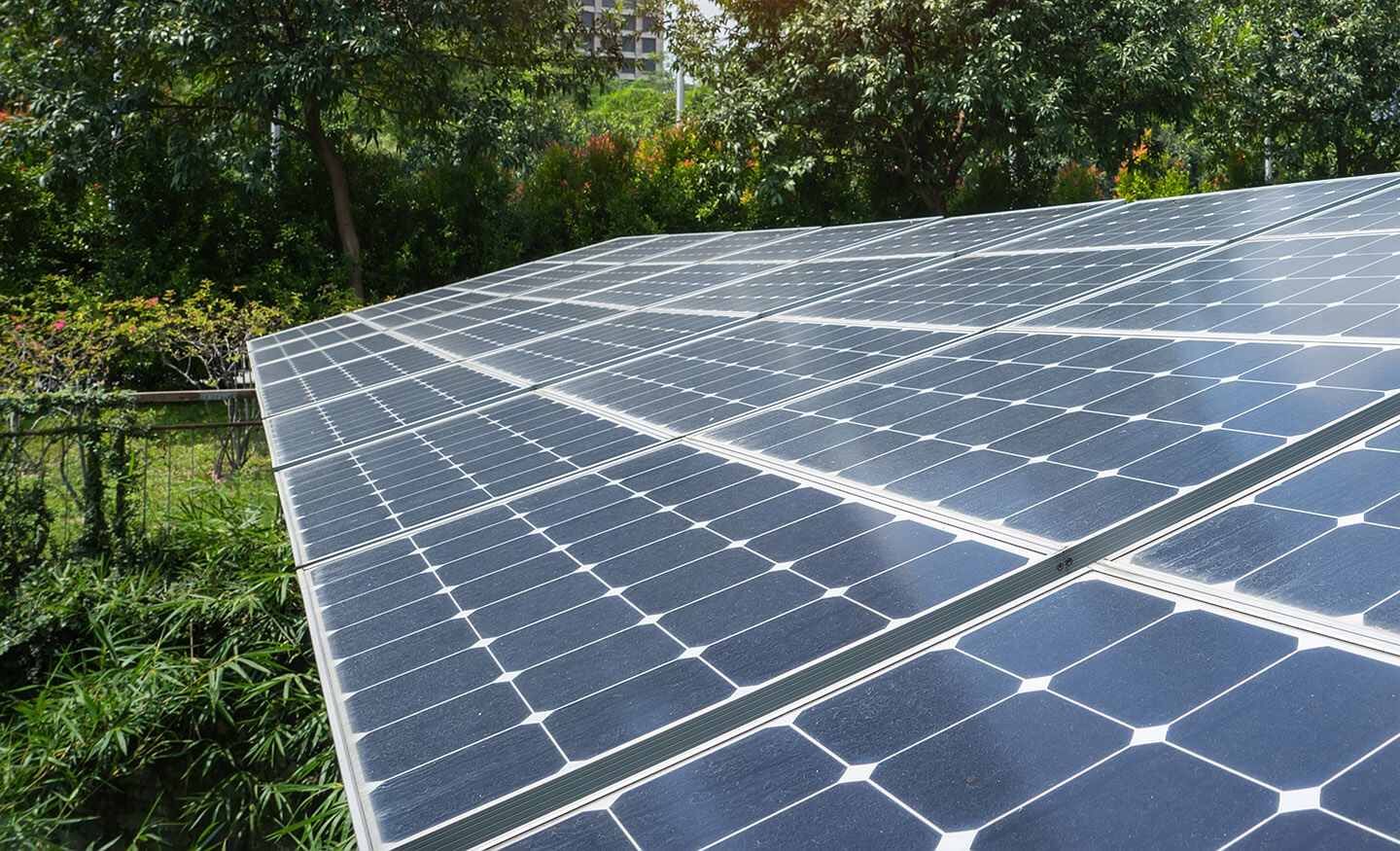
People replace solar panels for a range of reasons. They may have a single damaged panel, but replace the whole system, or they might need to repair or replace their roof and decide to ‘upgrade’ their solar system at the same time. Whatever the reason, many perfectly good panels end up in landfill.
The NSW Government’s Sustainability Advantage team recognised this as a significant ‘circular economy’ opportunity and has been working with 2 companies who are tackling the problem from different perspectives to bring new life to discarded panels.
An Australian first
The commissioning of Australia’s largest demonstration of solar panel reuse at Wagga Wagga in 2024, made the commercial reuse of second-hand solar panels a reality.
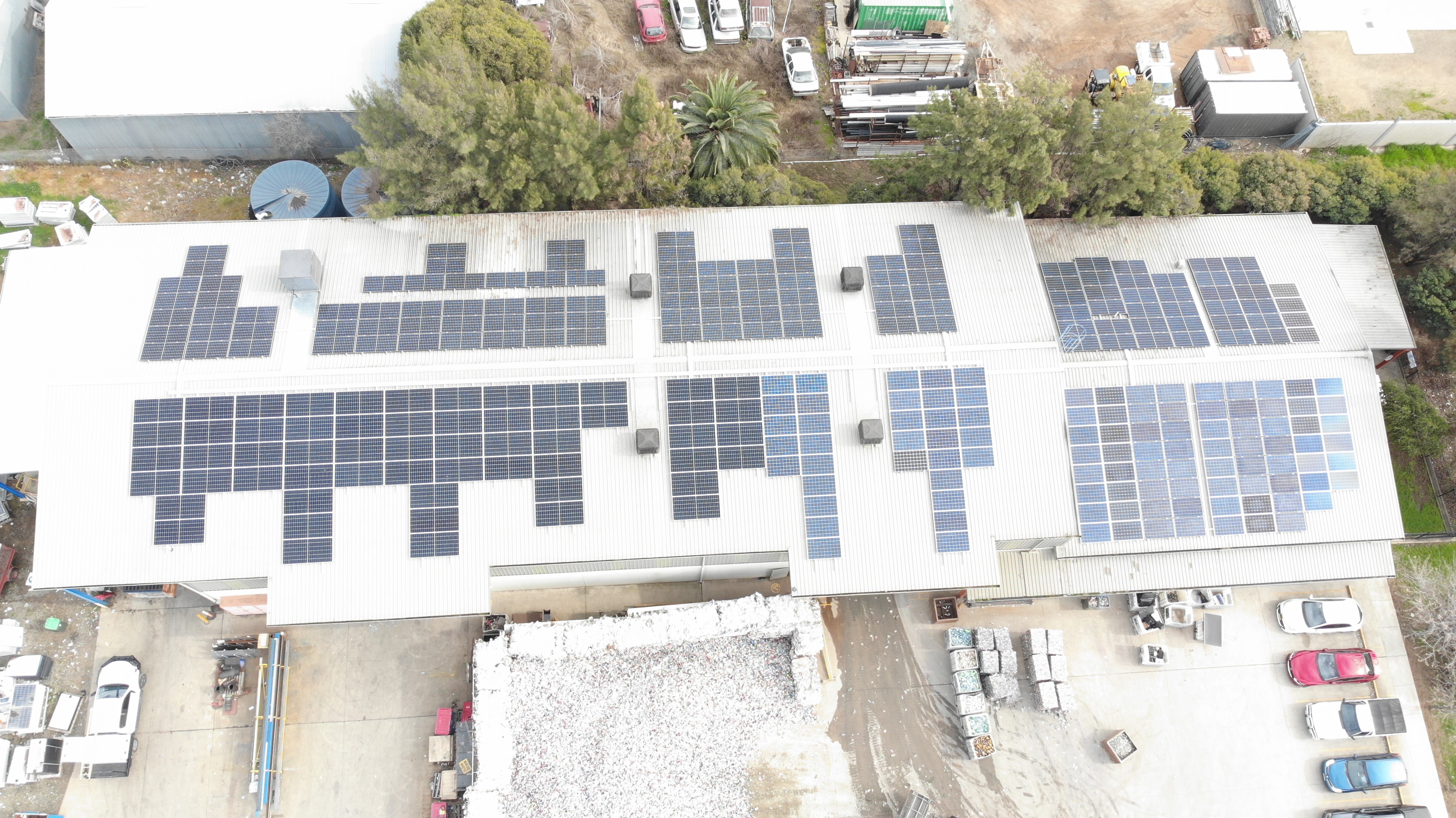
The Kurrajong Waste and Recycling facility at Wagga Wagga now has a full scale 100 kW solar system comprised entirely of panels previously destined for the rubbish heap.
This landmark achievement was the outcome of Sustainability Advantage teaming up with the Blue Tribe Company, Dubbo Regional Council, solar installer Solar Professionals, and the CSIRO to address this waste problem.
“If we’re to accelerate the transition needed to address the climate crisis, we need to collaborate across government, industry and research to find innovative solutions. This project exemplifies what can be achieved when we do just that.”
- Celia Tesoriero, Sustainability Advantage Manager
Out of this collaboration Second Life Solar was formed. With funding from the NSW EPA, they developed an innovative testing method to evaluate the condition of used solar panels and built an 8-kW second-hand solar garden at Dubbo Council’s Whylandra Waste and Recycling Centre.
James McGregor: So Australians have this love affair with rooftop solar in fact one in four homes now have a solar system installed on it. Which makes perfect sense because you know a solar is the most abundant energy resource on the planet. But inadvertently what's happened is, solar's grown so quickly we've created this problem of solar waste.
Celia Tesoriero: So Sustainability Advantage is a membership-based program for medium to large business and organisations. One of our organisations was experiencing a wicked sustainability problem.
James: So the Second Life Solar project really started with Sustainability Advantage and they had an organisation that had installed a large number of solar systems in the last sort of five or six years and they were going through and doing a roof replacement program. And what they actually found was that these solar panels even though they're only five or six years old it was actually cheaper for them to throw them away than it was to actually replace them and put them back on the roofs.
Dr Chris Fell: Solar panels are designed to last about 25 years and some will last a bit longer than this and some won't last quite as long but the problem is that we often don't use them for that long. We might upgrade our system we might change the roof on our house we might even knock the whole house down and in that case we've got a set of good solar panels that that haven't been used for their entire life
James: The vision for Second Life solar is that if you have a solar system on your roof that's say, under 15 years old, and you want to do an upgrade that you don't have to worry about throwing those panels away. Second Life Solar will take those panels and redeploy them to continue generating renewable energy for the rest of its service life and then eventually we then recycle those into another solar panel and we start the cycle again.
The goal was to launch a new secondary marketplace that will divert 10,000 tonnes a year of reusable end-of-life solar panels by 2030.
Solving the technical challenge
The Dubbo plant successfully showcased the cost-benefits of reused solar panels with CSIRO addressing the technical challenges and testing the second-hand panels for viability and monitoring performance. Tests show the Dubbo panels are performing at 104% – as good, or better than, new.
The successful pilot provided the evidence for them to scale up to commercial size – 10 times larger than the pilot in Wagga Wagga. This system is reusing about 300 photovoltaic (PV) panels that would have otherwise ended up in landfill.
A commercial product
‘‘The pilot at Dubbo was about giving solar panels a second life by diverting them from landfill and using them to continue to generate clean energy and help us reach NSW’s net zero targets sooner,” says James McGregor from Blue Tribe.
“But, the mission was to help create a circular solar industry and develop a pathway to reuse solar panels at scale. The plant at Wagga Wagga is the first step in realising a truly commercial operation.”
Second Life Solar continue to expand their operations with new commercial systems being installed across NSW. Theya re also working with several local councils to set up local drop-off points and regular pick-ups to increase access to recycling and reduce transport costs.
Blue Tribe worked with the CSIRO to set up a test rig to be able to test second-hand solar panels. In its first field trial they found that 89% of the panels collected for disposal were still fully functional. They also worked with the Queensland Government to test over 5,000 panels, which is the biggest data set in the world. 55% of these panels were fully functional with some still producing 94% of their rated output.
James McGregor: So I'm down here today at the Kurrajong Recycling Facility down here in Wagga Wagga.
And behind me what you can see are tonnes and tonnes and tonnes of solar panels that have been sent to waste.
Now fortunately, there's a recycling facility here on site, but the problem is most of these solar panels behind me are probably less than 15 years old and solar panels are designed to last for 30 years.
So we're down here today with a team from CSIRO to put a new test rig through its paces to actually assess these panels and see how many of them are actually still fully functional so that we can start looking at a reuse market here in Australia.
So this is our test rig here.
We actually put the solar panel inside the rig.
So that tells us whether the panels are actually in good condition or not good condition.
Super fast, put together by the team from CSIRO. Done an amazing job. This is its first time it's actually been used in anger and it's performed like a dream.
Alright, so these are the panels that were tested.
So this is about one and a half tonnes of solar panels.
So as you would've seen from the time lapse, I've had a pretty good shoulder workout, in the last couple of hours.
These panels here on my left, these are the panels that actually passed.
So these panels are in excellent condition.
They're fully serviceable, so they're capable to be used for generating renewable energy.
This small pile over here are actually the panels that we failed and they failed for a range of reasons whether the cells are cracked, the set panels weren't working at all for a whole range of different reasons.
We actually have, these are only 11% of the panels.
So of the panels we tested, there was a couple of pallets.
So one and a half tonnes of solar panels.
We had 89% of those solar panels that were at a waste facility, ready for disposal, were fully functional.
Now, this problem is gonna be happening all over Australia.
And so I think it's really important as part of this project that we start looking at how do we look at a circular solar solution that's not just about recycling, but also looks at the reuse of these solar panels because these solar panels here are just as capable of producing renewable energy as a brand new system on a roof today.
Blue Tribe has now won a major grant from the Australian Government that will enable them to develop new recycling technology and continue their work in giving pre-loved solar panels a new lease on life.
Blue Tribe estimates that Australia will accumulate up to 1 million tonnes of solar panel waste by 2033 — if laid end-to-end, these PV panels would encircle the earth 3 times.
Solar panel recycling creates a fully circular industry
While much of the conversation surrounding end-of-life solar panels has focussed on reuse, it is important to consider a fully circular solar industry that includes recycling and remanufacturing. The plan is that eventually when the panels finally reach the end of their serviceable life, components such as silicon, silver, copper, aluminium and glass could be recycled in the manufacture of new solar panels.
Sustainability Advantage also worked with Australia start up PV Industries to open a new solar panel recycling facility at Bankstown Airport.
The new panel recycling centre is expected to process up to 6,000 tonnes of solar panels per year, with each panel processed in under 90 seconds, and will divert approximately 200,000 panels from landfill.
As part of this project, 6 drop off points for used panels have been established in Bankstown, Dubbo, Maitland, Newcastle, Thornleigh and the Central Coast, building the collection network for end-of-life panels.

Key takeaway
A fully circular solar industry has the potential to generate significant economic benefits and jobs while reducing supply chain risks. Solar panel reuse and recycling achieve net zero, circular economy and renewable energy outcomes in a single project.
More stories

Scope 3 emissions typically make up the largest share of an organisation’s carbon footprint, yet they remain the most complex to measure and reduce.

As the largest healthcare provider in NSW, Hunter New England Local Health District (HNELHD) is taking ambitious climate action, aiming to become carbon and waste neutral by 2030.
Blackmores, a trailblazer in health and wellness, is setting a high standard with its ambitious goal to achieve net zero emissions by 2030 and develop a Nature Positive strategy.