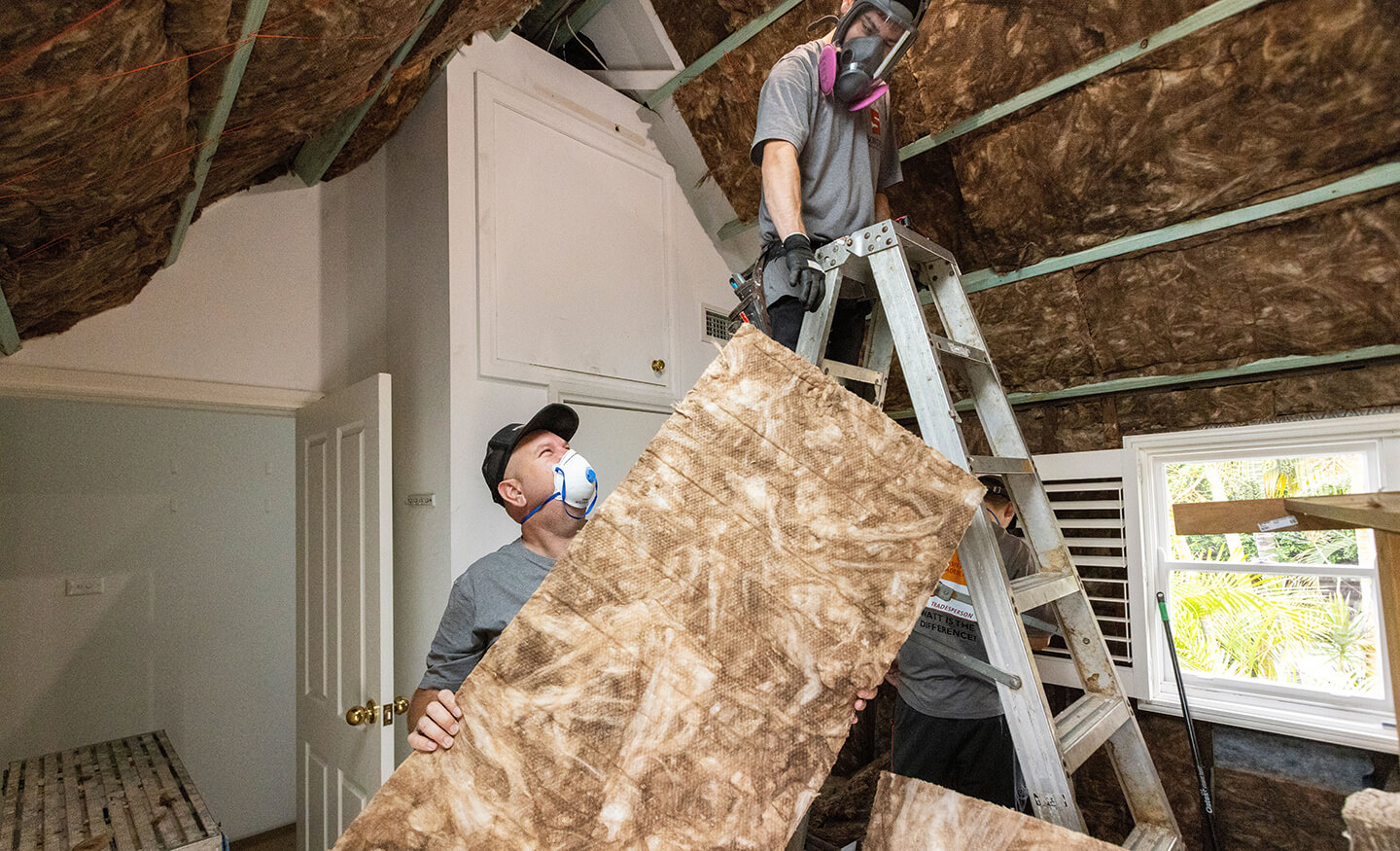
Cut your heating and cooling costs by up to 40%, using insulation to keep your home warmer in winter and cooler in summer.
How it works
Insulation works by slowing down the transfer of heat. In winter, it stops warmth from escaping through your ceiling, walls and floor. In summer, it stops the sun's heat from entering. This helps your home stay comfortable all year round and reduces the need for heating and cooling.
There are different types of insulation including:
- Bulk insulation which traps air and is made from fiberglass, polyester, wool and foam.
- Reflective insulation which reflects heat and is often made of aluminium foil laminated onto paper or plastic.
- Composite insulation which is made of a combination of bulk and reflective insulation.
Note
Foil insulation has been linked to fire and electrocution and is not recommended in Australia.
Who it’s best for
Insulation is a high-impact upgrade if you’re a home or small business owner. Consider an upgrade if you:
- live in an older home with little or no existing insulation
- have a home that is uncomfortably hot in summer and cold in winter
- want to cut your energy bills for heating and cooling.
How much you can save

How much it will cost

Government support available
Government incentives can help with this upfront cost.
Get started
-
Choose your insulation
- Find an expert to help you choose the right insulation for your needs, house type and climate zone. The Energy Efficiency Council has a directory of certified experts.
- Check the insulation product is the right fit. The higher the ‘R value’ rating, the better the product performs. Choose the highest R-value recommended for your climate zone. A good benchmark is R5.0.
- Look for quality products that meet standards for performance and fire safety. You can verify the compliance and quality of a product on the CodeMark register.
- Prioritise insulating areas that lose the most heat, such as ceilings and roofs.
-
Install your insulation
- Use a professional, where possible, so it’s fitted correctly following proper safety precautions.
- Get a safety check before installing insulation by a licensed electrician to confirm it is safe to cover any electrical wiring with insulation.
- If you’re doing it yourself, follow safety advice such as the tips in the Australian Government’s YourHome website.
-
Get the most out of your insulation
- Combine insulation with draught-proofing for better comfort and savings.
- Seal doors using self-adhesive foam or rubber strips around the frame and use a door snake.
- Seal windows by adding weather stripping to movable frames and using silicone sealant for fixed frames.
- Block vents and chimneys using draught-stoppers on exhaust fans and closing off unused chimneys.
- Check your insulation every few years to see if it needs to be replaced.
- Consider adding double glazed windows to add further insulation.
- Combine insulation with draught-proofing for better comfort and savings.
How to get financial help
NSW Government's Home Energy Saver loans
Get a zero-interest loan to install new energy saving technology and lower your energy bills.
- Who it's for: NSW homeowners or landlords looking to install installation or other eligible technology.
You must be an Australian citizen or permanent resident and have a combined, annual, taxable household income of up to $210,000. - How it works: Get a zero-interest loan of up to $15,000. These loans are funded by the NSW Government and delivered by selected finance providers.
- How to get it: Check your eligibility and choose your upgrade. Then you’ll need to select a finance provider, gather quotes and apply for a loan.
There’s currently no Australian Government incentive or rebate available for home insulation.