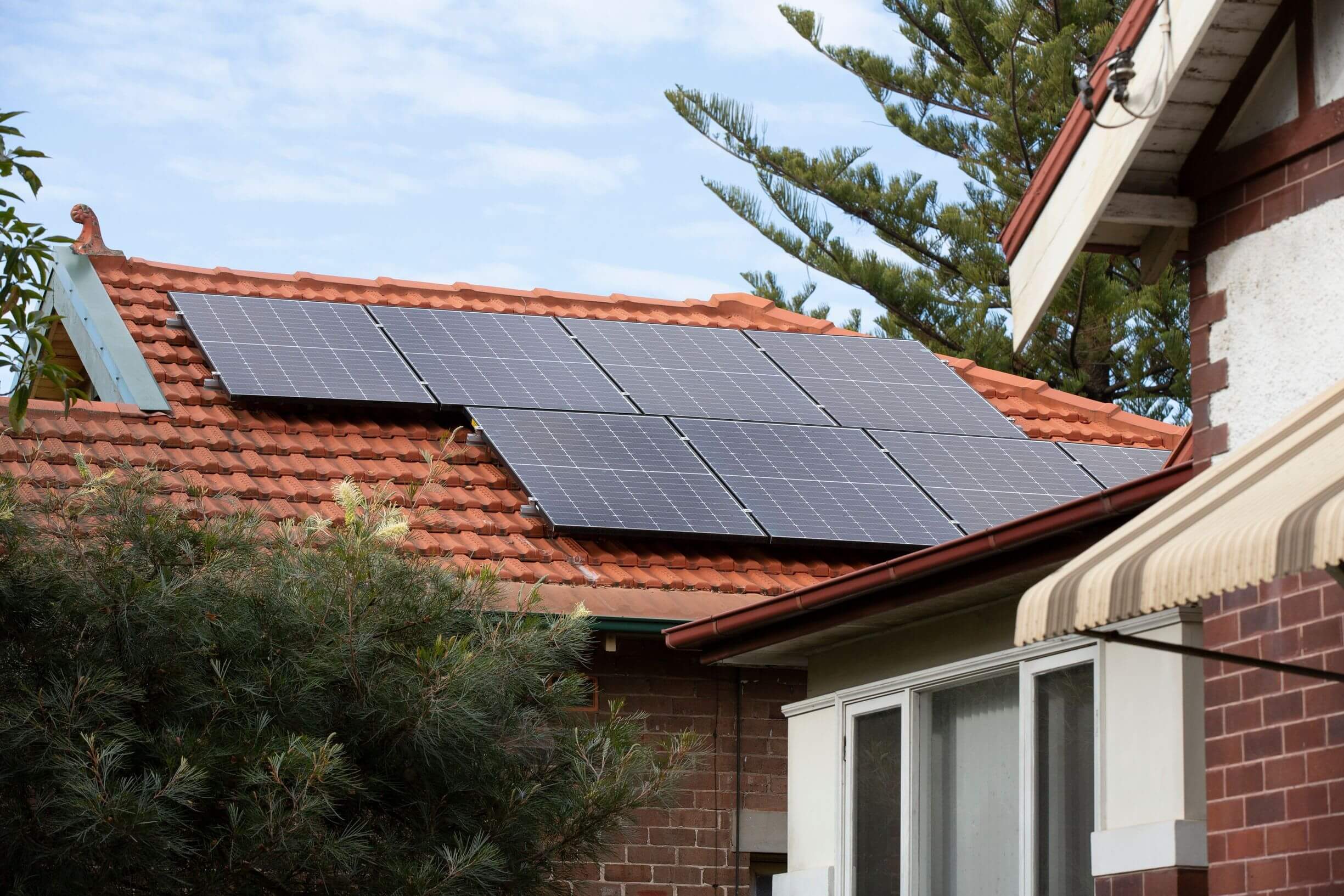
Cut your power bills by hundreds of dollars a year. Generate your own free, clean electricity, reduce your reliance on the grid and increase your property's value.
How it works
Solar photovoltaic (PV) panels are installed on your roof to capture the sun's energy. An inverter turns this into electricity to power your home for free. Any excess power you produce is either stored in a home battery, if you have one, or sent to the electricity grid for others to use. This can also often earn you credit on your bill, depending on the time of day.
Who it’s best for
This can be a smart upgrade for homeowners and businesses with suitable roof space. Consider getting solar if you:
- want to make a long-term investment to significantly reduce your electricity bills
- use a lot of energy in the daytime, especially between 10am - 3pm
- want or own an electric vehicle (EV) or charge a home battery
- want to substantially reduce your carbon footprint.
How much you can save
How much it will cost

Government support available
Government incentives can help with this upfront cost.
Case study

"We put our first solar system in 13 years ago on the back roof. We put in more solar. We bought the battery. We joined a Virtual Power Plant. One followed after the other.
And as a result, we are probably saving at the moment about $6,000 a year from all these changes that we've made."
– Ken and Corinne, NSW homeowners on building their own power system by installing solar, home battery and joining a Virtual Power Plant (VPP).
Get started
1. Check if your roof is suitable for solar
The best way to check is with a licensed solar installer. They’ll work with you to look at:
Roof condition
Make sure your roof is in good condition before installing solar. If it’s damaged or needs replacing in the next few years, solar may not be right for you. This is because removing and reinstalling solar can be risky and expensive.

Sun exposure
Solar works best on roofs that face towards the sun’s path in the east, north and west, as they get the most sun and produce the most electricity. South-facing roofs may not get enough sunlight. Look out for shade from trees or buildings, as these reduce the amount of electricity produced.
Roof angle
The angle of your roof affects how much sun your panels catch. North-facing roofs with a 30-degree angle are best for solar. Panels on steeper roofs can get more sun and produce more energy. Panels on flatter roofs may produce less electricity, reducing your bill savings. For these low-angle roofs, consider using tilt legs to raise the solar panels to a better angle.
Roof space
More roof space means more panels and more power. Your installer will check if your roof has enough room to fit panels that meet your energy needs.

Roof strength
Your roof needs to be strong enough to handle additional weight from your solar panels and the people installing them. Your installer will check your roof to ensure it’s safe to install the panels.
2. Choose your solar system
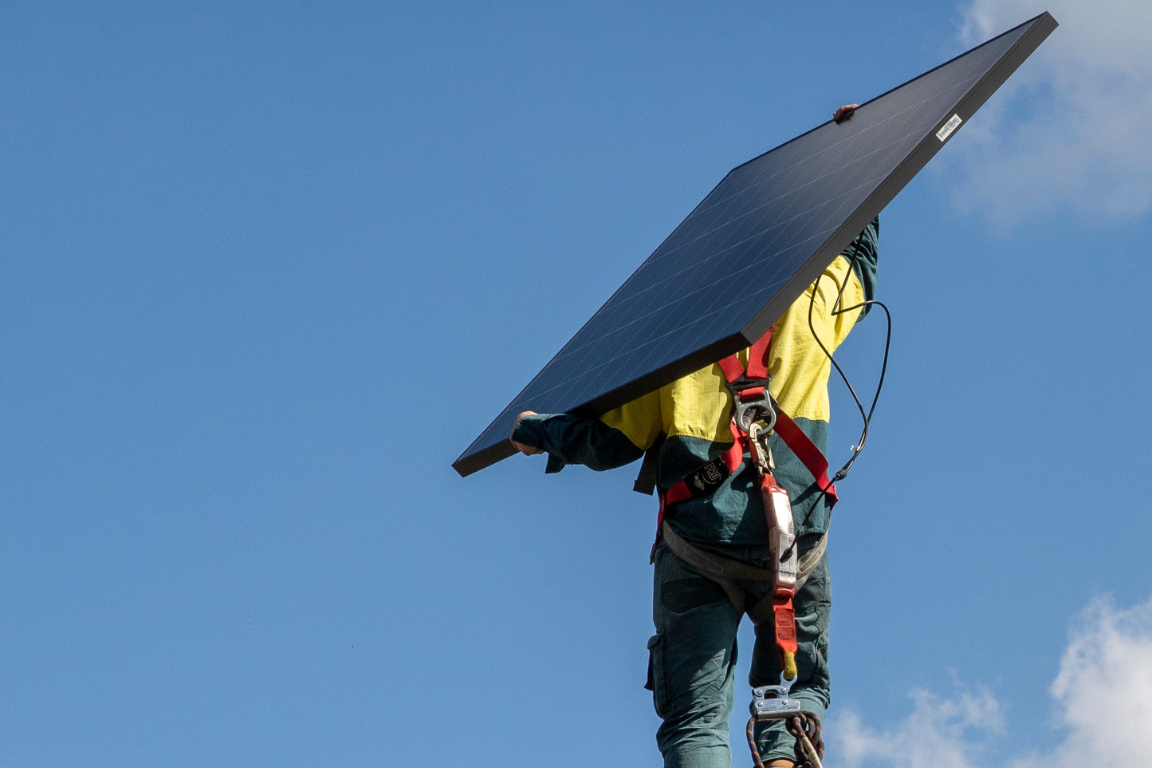
- Look at New Energy Tech approved sellers to purchase a system and Solar Accreditation Australia (SAA) installers to install it.
- Research providers by:
- reading independent reviews online
- asking friends and family for recommendations.
- Get multiple quotes to compare price, system design and product quality. A good quote and contract should include:
- a site-specific system design
- a timeline for starting and completing installation
- a performance estimate
- an itemised list of components and products
- component and installation warranties
- a breakdown of costs including any rebates or discounts.
- Check the panels and inverter offered are on the Clean Energy Council's approved product list to be eligible for the Australian Government’s Small-scale Renewable Energy Scheme discount.
- Work with your chosen installer to design a system that’s suitable for your roof and energy use.
3. Install your solar system
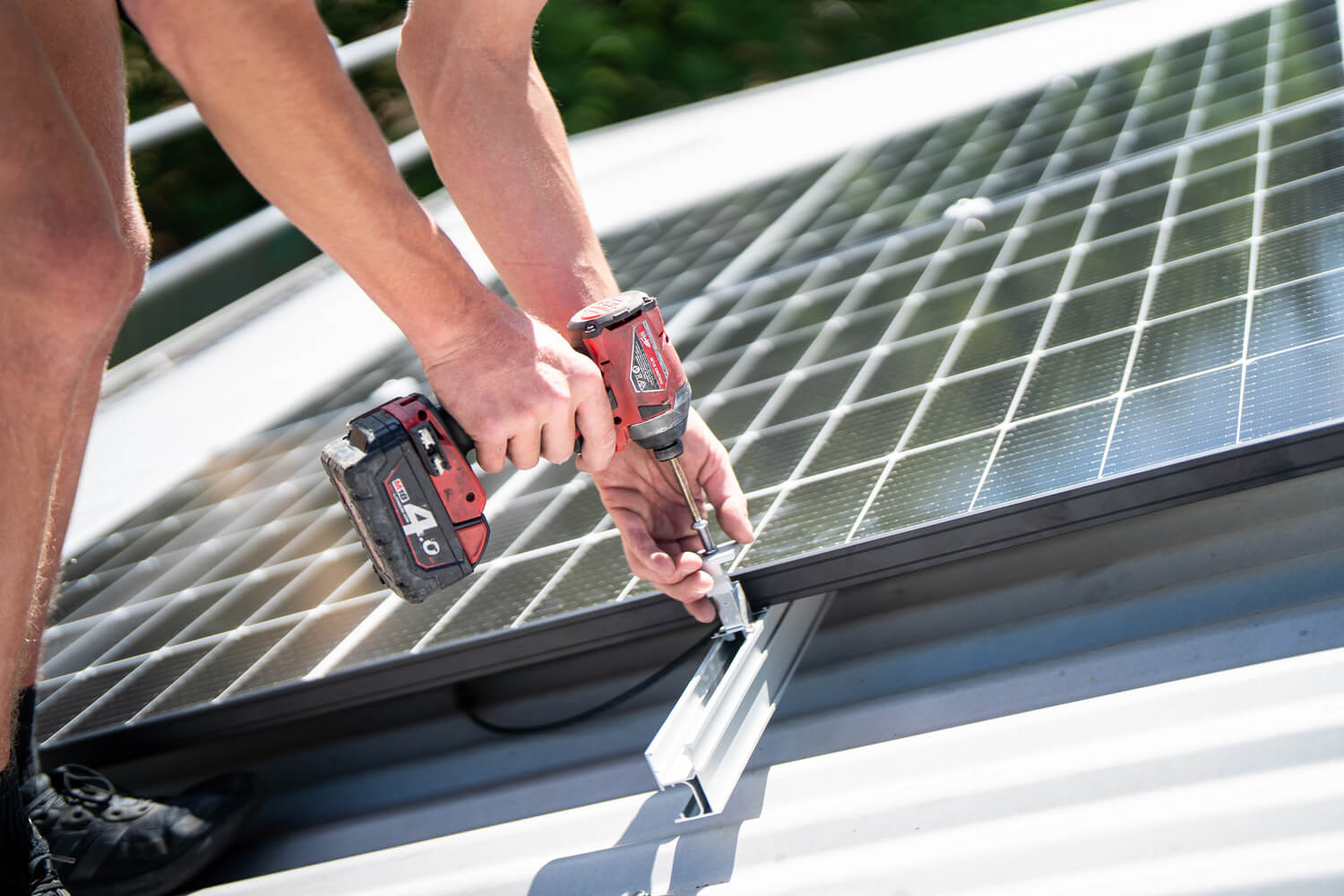
- Installation must be completed by a licensed and SAA-accredited installer so it’s safe, compliant, and eligible for the government discount and connection to the grid.
- Your installer will manage the entire process for you, from the initial design and grid approval application to the final installation and commissioning.
- After installation, your installer should:
- provide written instructions on how to operate and maintain your system
- put stickers on your power board to show what type of solar system is installed
- give you a certificate of compliance that details the work done and that the system has been installed according to Australian standards
- provide you with warranty information
- leave the area they were working in clean and tidy
- turn your power back on.

4. Get the most out of your new solar system
- Follow the instructions of your retailer. They should give you clear information about how to safely use, maintain and get the most out of your solar system.
- Compare energy plans to find the best deal. You may need to change your electricity plan or your energy retailer now you have a solar system to maximise your solar feed-in tariff.
- Track how much energy your system makes and how much you use, stay in control and spot issues early. This can be done through a mobile phone app connected to your solar system.
- Run your high-energy appliances between 10-3 pm to use your free solar power. This includes your:
- oven
- dishwasher
- washing machine
- dryer
- EV charging
- If you’re not at home, you may be able to set timers for some appliances.
- Monitor how much energy different appliances use and how much solar power you have available. This can be done on the mobile phone app linked to your solar system. If you’re not sure how to access this, talk to your installer.
- Keep your panels clean. Rain will more than likely do this. If you can’t clean the solar panels safely from the ground or you think they need a more thorough clean, contact a company that specialises in servicing solar panels.
- Check your panels are not shaded by growing trees to ensure they’re working at their best.
Find out more about solar on the Australian Government’s Your Home website.
How to get financial help
Financial support for rooftop solar systems is available from both the Australian and NSW Governments. These incentives work together to lower your upfront and ongoing costs.
NSW Government's Home Energy Saver loans
Get a zero-interest loan to install new energy saving technology and lower your energy bills.
- Who it's for: NSW homeowners or landlords looking to install solar or other eligible technology.
You must be an Australian citizen or permanent resident and have a combined, annual, taxable household income of up to $210,000. - How it works: Get a zero-interest loan of up to $15,000. These loans are funded by the NSW Government and delivered by selected finance providers.
- How to get it: Check your eligibility and choose your upgrade. Then you’ll need to select a finance provider, gather quotes and apply for a loan.
NSW Government’s Solar for Apartment Residents program
- How it works: This grant is only for apartment residents. It funds 50% of the cost for an owner’s corporation to install a shared solar system on an apartment building. This means renters and apartment owners can both benefit from solar energy.
- How to access it: The application must be made by the owners’ corporation or strata manager, not individual residents. If you live in an apartment, you should encourage your strata committee to apply.
Available incentives
Australian Government's Small-scale Renewable Energy Scheme
- How it works: This is the main incentive available to everyone. It provides a large, upfront discount on the total cost of your system. Your installer will claim the certificates on your behalf and the discount will be automatically applied to your quote.
- How to access it: Simply choose a Solar Accreditation Australia (SAA) installer who uses approved panels and inverters. They will handle all the paperwork for you. The discount will depend on the size of your system and your location.
Australian Government’s Household Energy Upgrades Fund
- How it works: This program offers low-interest green loans through participating banks and lenders for solar PV.
- How to access it: You can apply for a green loan through a participating lender when you are ready to purchase your system.