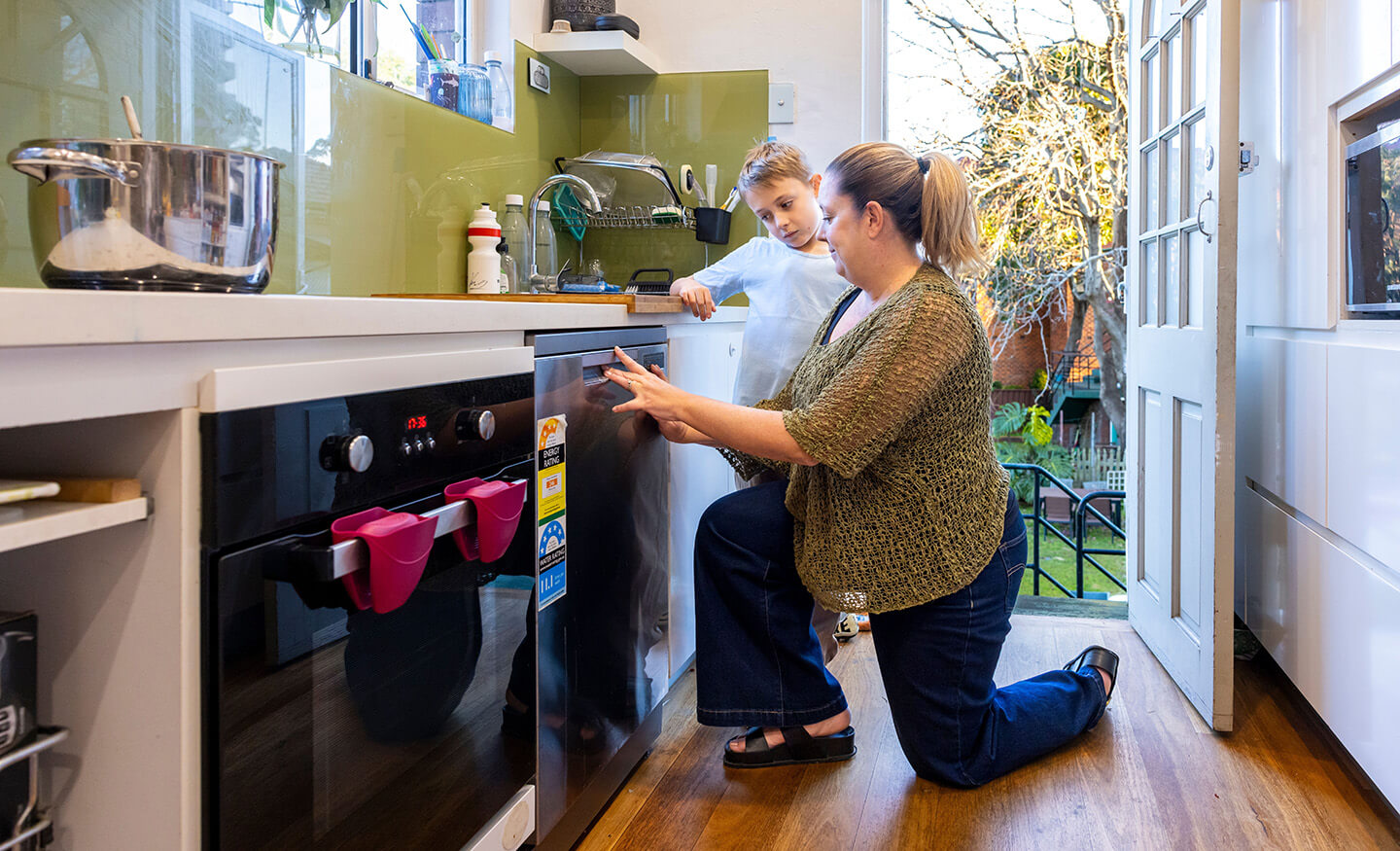
Save up to $150 per year and cut your water use.
How it works
Energy efficient dishwashers use less water and power. They often use shorter, cooler cycles and air drying, and can adjust to how dirty your dishes are.
Who it’s best for
This upgrade is best if you’re a homeowner, small business owner or landlord wanting a simple appliance update that saves money over time.
Consider an upgrade if your dishwasher:
- has broken down or needs expensive repairs
- is over 10 years old.
How much you can save



How much it will cost

Get started
-
Choose your dishwasher
- Compare models and prices online or instore, read reviews and ask friends and family for recommendations.
- Choose a model with half-load cycles and eco-wash settings, and a delay-start function.
- Pick the right size for your needs.
- Check running costs with the Energy Rating calculator.
- Check your model has at least 3.5 stars on the Energy Rating Label and Water Rating Label to maximise your water and energy efficiency.
-
Install your dishwasher
- Install it yourself or hire a tradesperson. Many retailers include delivery and installation.
- Recycle your old dishwasher. Ask your retailer or find a local drop-off and pick-up at recycling near you.
-
Get the most out of your new dishwasher
- Only run your dishwasher once it is full. Don’t overcrowd it.
- Use half-load cycles and eco-wash settings.
- If you have a time of use electricity plan, schedule the dishwasher to run during cheaper off-peak electricity periods.
- Save water by scraping food scraps off plates instead of rinsing them.
- Clean your dishwasher filter regularly. If you use it daily, aim to clean it every 2 weeks. If you use it less often, aim for monthly.
How to get financial help
There’s currently no NSW Government incentive or rebate available for dishwashers.
Use this tool to find financial support from the government and energy saving tips to help you save money on your energy bills.
There’s currently no Australian Government incentive or rebate available for dishwashers.