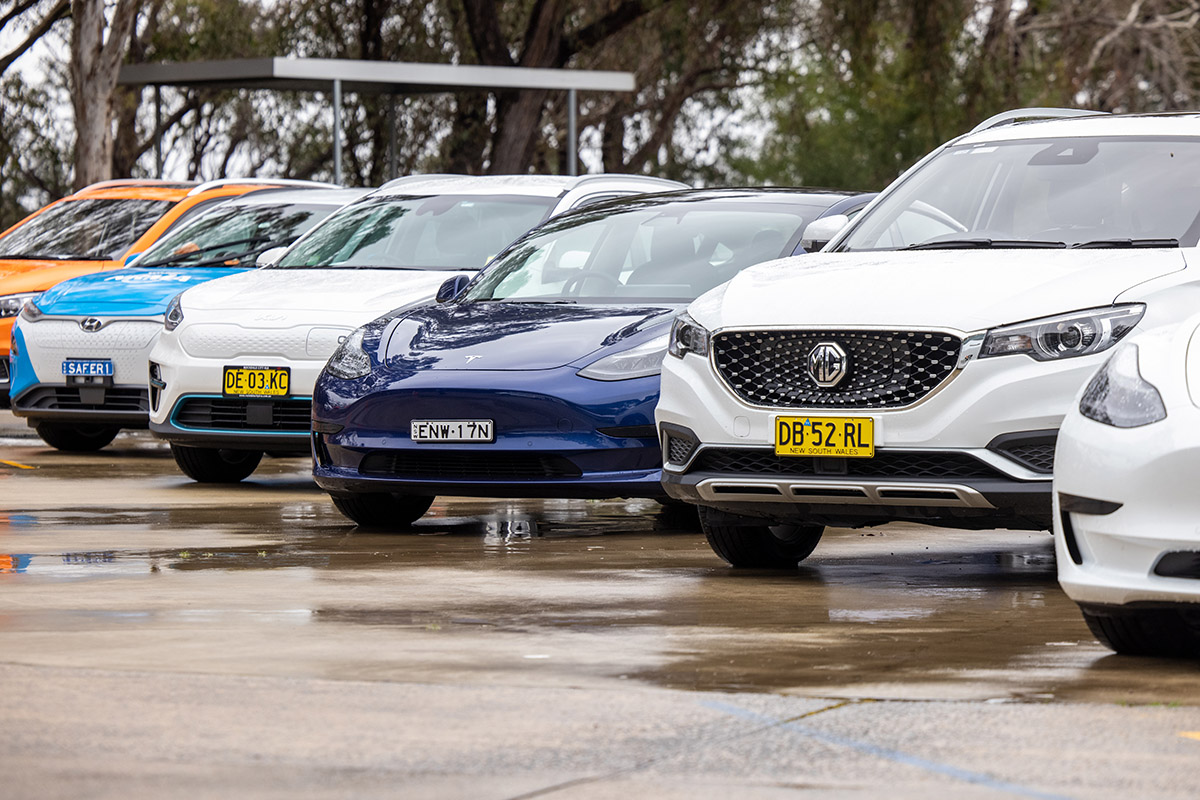
The NSW Government has updated the NSW Electric Vehicle Strategy to reduce emissions and make electric vehicles (EVs) even more accessible.
Transport is a key sector of emissions and EVs are the most important way to reduce our emissions in this sector. This means NSW must be ready for equitable EV ownership at scale.
Since the release of the 2021 Strategy, EVs have increased from less than 1% of new light vehicle sales in 2020 to 8.9% in 2025. 50% of new car sales to be battery EVs by 2030 is still achievable. This will set us up to reach our 2035 target for EVs to be the vast majority of new car sales.
EVs provide benefits for individuals and the community. Battery and fuel cell EVs produce no tailpipe emissions, have lower running costs than petrol and diesel vehicles, and provide health benefits through lower air and noise pollution.
Increasing the uptake of EVs also presents new job opportunities, improves fuel security and can help balance household energy supply.
NSW is EV ready. There has never been a better time to switch to an EV and start saving.
Key Electric Vehicle Strategy programs
The NSW Government is continuing to invest in a widespread, world-class electric vehicle (EV) charging coverage to future proof the EV network. This includes investment into EV fast charging grants. These grants will focus on charging blackspots and co-fund charge point operators to install and operate ultra-fast charging stations at 100 km intervals across all major state highways, and every 5 km in metropolitan areas.
Find out more information on the electric vehicle fast charging grants page.
In 2023, about 50% of new light vehicles in NSW were sold to business and government fleet operators. Reducing emissions from fleets will therefore be crucial to lowering emissions from our transport sector.
That’s why we’re continuing to invest in helping organisations transition to electric through the electric vehicle fleets incentive. The competitive bidding and kick-start funding options are helping organisations bridge the cost of transitioning passenger, light commercial, sports utility vehicles and trucks up to 23t to battery EVs.
Find out more information on the electric vehicle fleets incentive page.
Publicly available chargers help provide convenient charging options for current and prospective EV drivers who don’t have a garage or driveway to plug in their EV.
That’s why we’re investing in the installation of EV kerbside chargers in areas of NSW with the least access to private, off-street parking.
Find out more information on the electric vehicle kerbside charging grants page.
While climate change isn’t going to be solved by offsets alone, they provide an important avenue of emission reduction. Offsets are a valuable part of the solution for emissions, specifically the emissions from your vehicle. NSW drivers will continue to have the opportunity to offset their emissions at the point of annual registration.
Find out more about our carbon offset projects on the vehicle emissions offset scheme page.
The Vehicle Emissions Star Rating (VESR) is a six-star rating system that not only helps Australians consider the environmental impact of their cars but also the fuel costs. The more stars a vehicle has, the lower the vehicle’s tailpipe CO2 emissions.
Compare data across over 16,000 makes and models, or consider your annual costs with a fully customisable calculator. Input the price you pay for fuel or electricity and the distances you drive for a personalised result.
Find out more information on the Vehicle Emissions Star Rating page.