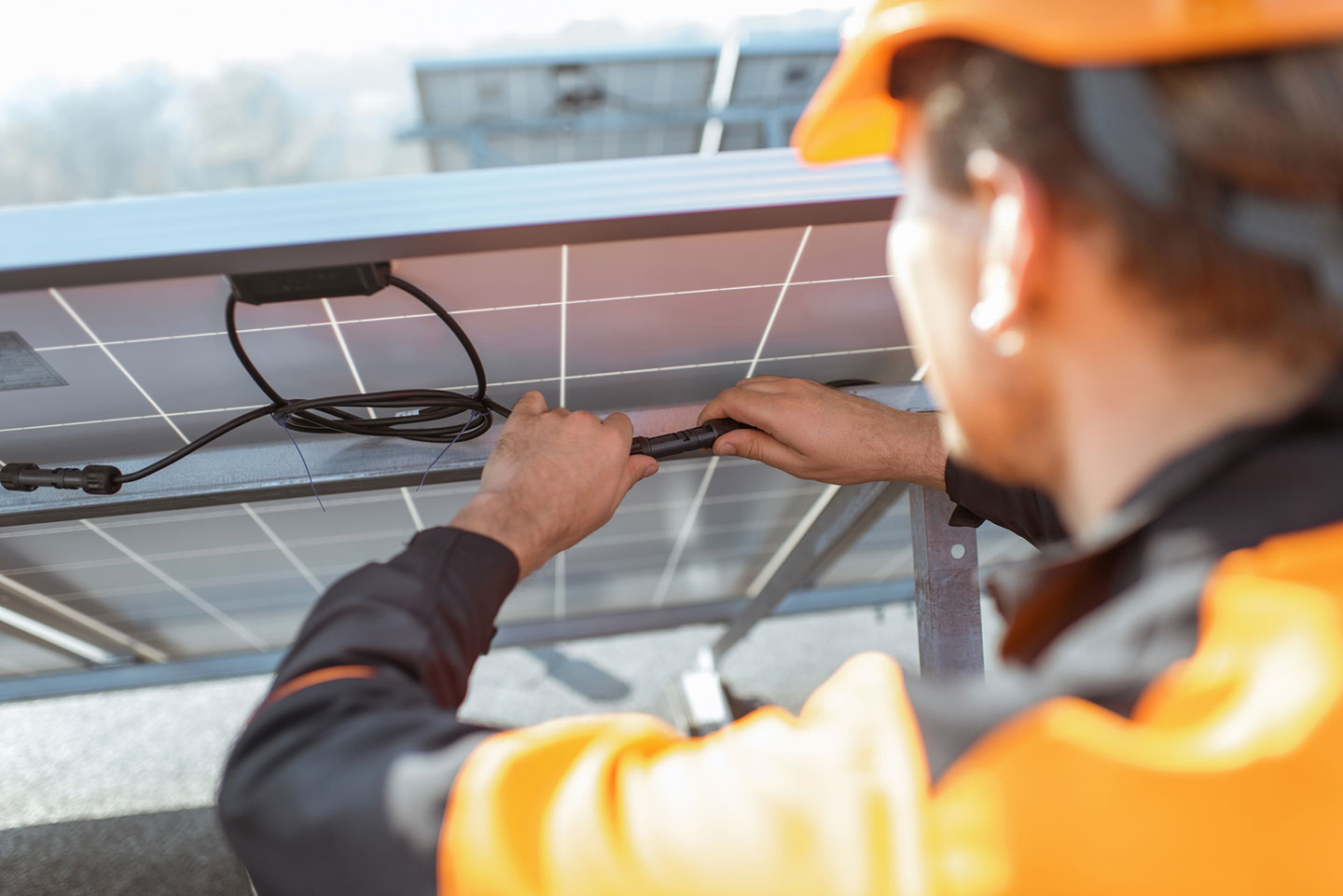
The installer portal makes it easier for installers anywhere in NSW to register the installation of new Consumer Energy Resources (CER), like rooftop solar and battery.
Our Consumer Energy Strategy includes 50 actions to ensure NSW households and small businesses can participate in and benefit from the energy transition. A key action is the development of a new smart compliance system called the NSW Consumer Energy Resources Installer Portal.
The portal will:
- provide a single registration process for installers across all three NSW distribution networks
- help ensure grid safety and stability by enabling the Australian Energy Market Operator’s (AEMO) Emergency Backstop Mechanism
- make it easier to capture the data required for the AEMO's Distributed Energy Resources (DERR) and the Certificate of Compliance to for Electrical Works (CCEW)
- support the introduction of flexible export limits in NSW, enabling customers to install larger systems and export more solar back to the grid.
We have worked with NSW distribution network service providers (DNSPs) to develop the portal. Learn more in the video and frequently asked questions below.
Launch of the NSW CER Installer Portal in November 2026
From 2 November 2026, solar businesses will start using the NSW CER Installer Portal for new and upgrading rooftop solar and battery systems that have a DNSP connection application submitted and approved from that date.
From November, all new and upgrading CER systems, like rooftop solar and battery up to 200 kW, will need to be commissioned through the portal. This process also covers the Certificate of Compliance for Electrical Work (CCEW) and AEMO Distributed Energy Resources Register (DERR) requirements for those installations. The requirement for systems to be enabled for the Emergency Backstop Mechanism (EBM) will be rolled out in phases, managed by the relevant NSW distribution network service providers (DNSPs).
- Endeavour Energy and Essential Energy: new and upgrading CER systems up to 200 kW that have a DNSP connection application submitted and approved from Monday 2 November 2026 must be commissioned through the portal
- Ausgrid: new and upgrading CER systems up to 200 kW that have a DNSP connection application submitted and approved from Monday 23 November 2026 must be commissioned through the portal.
Implementation of the Emergency Backstop Mechanism (EBM) from November 2026
Details of the Emergency Backstop Mechanism rollout for each network are available here:
NSW CER Installer Portal pilot: September and October 2026
In September and October 2026, the NSW Government and NSW distribution network service providers (DNSPs) are working with a small group of solar installers to pilot the NSW CER Installer Portal and the implementation of the Emergency Backstop Mechanism.
Pilot participants will be among the first to commission live installations through the portal. Their feedback will help refine the portal, training and support materials ahead of the wider November rollout.
The CER Installer Portal is a digital tool that will make it easier for installers anywhere in NSW to:
- register new or upgrading consumer energy resources rooftop solar systems
- check that installations meet safety and technical standards
- confirm that systems are connected to the local distribution network utility server via the internet
- integrate with connection portals for Ausgrid, Endeavour Energy and Essential Energy.
The portal will launch in November 2026.
The portal provides a simpler way for distribution networks and installers to:
- register accurate details about new and upgraded CER being connected into the grid automatically share data to AEMO’s Distributed Energy Resources Register and the NSW Building Commission’s Certificate of Compliance for electrical work (CCEW)
- confirm that these systems meet national standards
- ensure communication with the relevant distribution network’s utility server.
This standard approach to ensuring compliance means that distribution networks can:
- temporarily reduce exports or pause generation as a last resort in emergency conditions when instructed by AEMO to secure the grid (called the Emergency Backstop Mechanism)
- allow customers with flexible exports to feed more solar energy into the grid when the grid is stable).
From November 2026, installers in NSW will be required to:
- fit all new and upgrading rooftop solar systems up to and including 200kW with inverters that comply with the Australian standard, called Common Smart Inverter Profile - Australia (CSIP-AUS)
- register all new and upgraded grid-connected CER up to and including 200kW through the portal
- test that all newly installed rooftop systems registered in the portal are communicating over the internet with the relevant distribution network's utility server. (Where a premises lacks reliable internet connectivity, a low default export limit will apply until connectivity is available.)
The CER Installer Portal will play a critical role in supporting the Emergency Backstop Mechanism and helping keep our electricity grid secure and reliable.
The portal provides a single registration process for installers across all 3 NSW distribution networks to ensure that solar systems are connected to the local distribution network utility (DNSP) server enabling the Australian Energy Market Operator’s (AEMO) Emergency Backstop Mechanism (EBM).
Currently some DNSPs have had to apply a fixed limit on the amount of excess solar energy customers can export back into the grid.
The portal ensures that new and upgraded rooftop solar systems are compliant and able to communicate over the internet with network utility servers.
This enables networks to flexibly manage the exports of compliant systems, which means customers can maximise exports when there is capacity in the local network, and networks can reduce exports when needed to maintain local grid stability.
This approach helps customers get more value from their solar systems and reduces the need for last resort measures like the emergency backstop.
The NSW Government will support solar businesses with clear communication and comprehensive training, so they are ready to go on day one.
We are working closely with NSW DNSPs and Energy Networks Australia to:
- develop a suite of simple, accessible and informative training materials that will be made available before the portal is introduced
- engage with solar industry representatives through a CER Industry Reference Group to help design the portal and supporting resources.
There may also be opportunities for installers to use a prototype of the portal ahead of its release, to test functionality and usability.
NSW CER Installer Portal user training
A free, self‑paced online module is available through the Clean Energy Council’s LearnLAB to help portal users register and navigate the NSW CER Installer Portal to complete compliant installations. The module takes around 60 minutes to complete. Participants earn 10 CPD points on completion.
Complete the NSW CER Installer Portal Training for Installers and Applicants module on the Clean Energy Council’s LearnLAB.
Awareness training
A free, self‑paced online module is available through the Clean Energy Council’s LearnLAB to help installers understand Minimum System Load, the Emergency Backstop Mechanism and the implementation of the NSW CER Installer Portal. The module takes around 45 minutes to complete. Participants earn 20 CPD points on completion.
Complete the NSW Emergency Backstop Mechanism and CER Installer Portal module on the Clean Energy Council’s LearnLAB.
Industry webinars
On 26 November 2025, the NSW Government and NSW distribution networks (Ausgrid, Endeavour Energy and Essential Energy) hosted an industry webinar: Preparing for the Emergency Backstop Mechanism in NSW.
The webinar resources and recording provide background information about the Portal and how it supports solar installers to register installations and meet new regulatory requirements.
Important update:
This webinar reflects information available as of November 2025. Program timelines and some requirements have been updated. The most current information is available on this webpage.
Frequently asked questions
Yes. The portal helps ensure CER systems are installed safely, meet technical standards (including CSIP-AUS), and can connect to DNSP utility servers. This allows the network to communicate with CER systems during rare electricity system emergencies, such as Minimum System Load events.
Licensed installers who install or commission eligible consumer energy resources in NSW, including solar PV and battery systems, must use the Portal. From November 2026, use of the portal will be required to meet new NSW regulatory requirements.
All new and upgraded CER systems that have been approved for connection to DNSP networks must be registered. This includes rooftop solar (PV), battery storage systems, and the associated inverters up to and including 200 kW in inverter capacity.
Information should be submitted during the commissioning process.
Yes, for eligible Consumer Energy Resources (CER) system work.
The portal provides a convenient option to complete the Certificate of Compliance for Electrical Work (CCEW) at the same time of registration for CER systems up to 200kW in place of existing obligations to complete the CCEW through the Building Commission of NSW eCert portal and submitting a Distributed Energy Resources Register (DERR) record. These functions will now be completed through the CER Installer Portal.
If a job also includes electrical work that is not covered by the NSW CER Installer Portal requirements, you still need to submit a separate CCEW through BCNSW eCert for that work.
No. There is no fee for installers to register or submit information through the CER Installer Portal. However, application fees will still be required through DNSP application portals.
Guidance material, training materials and support contacts will be published on the NSW Government website.