CSIRO’s Data Clearing House software is helping industry get the most out of their on-site renewable energy
07 September 2023
Unlocking valuable insights into how smart buildings use energy, CSIRO's Data Clearing House helps buildings conserve power and plays a key role in the smart distributed energy grid.

Improving building energy management is crucial to meeting net zero targets. Commercial buildings currently account for 39% of global energy-related carbon emissions, two-thirds of which are operational emissions such as heating, cooling and power, according to the International Energy Agency.
Smart buildings combine a range of technologies to be more automated, economical and energy efficient. Part of the challenge when tackling carbon emissions is a lack of standardisation between smart building technologies. This makes it difficult for building managers to see the big picture when attempting to gather and interpret the vast amounts of energy-related data which smart buildings generate every day.
Rather than operating in isolation, smart buildings also require tight integration with the energy market to better manage demand and even supply, as they potentially feed energy back into the grid.
Stephen: There's the old adage, I guess, that you can't manage what you don't measure.
Businesses and building owners can address their environmental, social, and governance responsibilities, and they can do it in a way that reduces emissions, saves on their energy bills, and helps them to access the various incentives from the schemes that are available from the government.
So with our transition to the renewable energy, we're gonna get new reporting requirements that building owners and businesses have to keep up to date with.
The CSIRO Data Clearing House is a software platform that collects and manages data relating to energy efficiency in a building, helps building owners to collect and consolidate all the data so that they can use it to satisfy all their reporting requirements, including NABERS ratings.
The CSIRO Data Clearing House creates an official baseline that can be used to track and demonstrate your emissions reduction in the building.
The insight can be used to save money and reduce emissions.
So this is all quite new.
So building owners now have got the opportunity to look around their building for flexible demand assets to save them emissions and reduce costs.
They include batteries, electric vehicles, they include thermal storage, like hot water and air conditioning systems.
These can all shift their load over the time of the day in order to match consumption with the availability of renewable energy.
Matt: Renewable generation fluctuates much more than that of traditional generation methods.
Flexible demand assets allow the building owners to consume the energy when it's at low cost periods during the day, store it or use it during high cost.
Stephen: Ideally, building owners will use their flexible demand assets to shift their usage and take advantage of the storage to consume energy when it is low emissions and lowest cost to them.
So we need the flexible demand assets to be digitally connected to take advantage of the low emissions, low cost renewable energy.
Businesses and building owners are looking for a platform that is secure, that uses interoperable standards and it provides ownership of the data for the building owner.
Matt: Data sovereignty is a really important part of the Data Clearing House.
In this, we want to avoid vendor lock in and proprietary systems controlling our users' data by providing them access controls and the ability to remove their data whenever they want.
Stephen: So what the Data Clearing House will be doing is it will be collecting and storing and timestamping all the electricity meter data, and it will be then learning the behaviour of the building and creating a baseline energy consumption profile for the building.
When using the flexible demand assets to shift energy consumption, we can calculate the energy that's been shifted and the emissions savings and cost reductions that have been achieved.
Our net zero buildings are generally calculated using average annual emissions factors and the ability of the Data Clearing House to take time of use emissions factors can help us to validate and to track towards true zero and not just net zero.
And you can do all sorts of other things.
You can use the baseline for creating certificates in the energy savings schemes, and that creates an additional revenue stream for you.
This journey towards true zero emissions is a journey that we're all on.
It's possible in all buildings, big, small, residential, business, and the Data Clearing House is an ideal platform to track your journey towards true zero emissions.
The New South Wales Digital Infrastructure for Energy Flexibility Project is led by CSIRO and proudly funded by the New South Wales Government.
Our industry partners can help building owners to access the benefits of the project, and also to connect to the Data Clearing House.
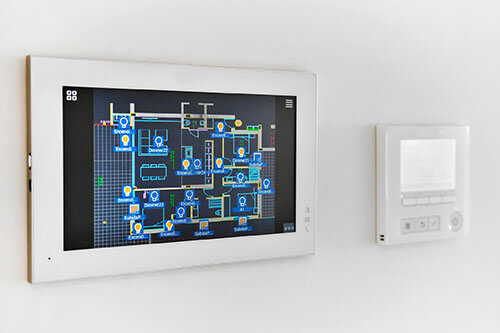
Smart buildings
Smart buildings combine a range of technologies to be more automated, economical and energy efficient. CSIRO's Data Clearing House allows smart buildings to take a holistic view of their energy data. This enables them to intelligently optimise energy usage in alignment with net zero targets and feed power back into the grid to meet future demand. The innovative platform will help businesses curb energy bills and shrink their carbon footprint.
Unlocking potential
CSIRO's Data Clearing House is a cloud-based platform which helps smart buildings centralise, standardise and manage their energy data, rather than leave it locked away in isolated silos. The project has received $3.75 million from the NSW Government to help smart buildings unlock their full energy potential.
The Data Clearing House is designed to complement rather than replace existing building management platforms. By offering a more holistic view of the building, the platform allows building managers to better optimise power usage during the day to curb energy bills, shrink their carbon footprint in line with environmental targets and profit from shifting their load or generation to the grid.
The Data Clearing House also allows smart buildings to participate in on demand networks to help balance energy supply and demand by synchronising electricity consumption with variable renewable energy in the grid, says CSIRO's energy efficiency research leader Dr Stephen White.
Connecting energy assets
Today, the flexibility for power generators to dispatch energy to the grid on demand is limited to large generators, such as gigawatt-scale coal-fired power stations. It relies on connectivity with the Australian Energy Market Operator (AEMO). By 2050, AEMO expects three quarters of all dispatchability in the electricity market is going to come from distributed energy sources. This includes electric vehicles, batteries, thermal storage (hot/chilled water), air conditioning, photovoltaic curtailment, and standby generators coming from sources such as smart buildings.
What's lacking is a way to intelligently coordinate supply and demand between all those distributed energy sources, White says. Within smart buildings, this can include a wide range of flexible energy assets such as batteries, standby generators, heating and cooling, hot water systems, and even electric vehicles.
"At the moment, there isn't the digital connectivity down to these smaller devices that sit within buildings and are largely invisible to the grid," he says.
"The Data Clearing House is making these devices visible to the grid, and we're providing the digital connectivity that would enable them to be dispatchable to keep the lights on and balance supply and demand."
Sharing data to drive innovation
To help drive innovation, the Data Clearing House is also a platform on which smart buildings can share data. Along with connecting research to industry, it also facilitates connecting smart buildings to service providers.
Developers can create innovative applications which run on the platform, available via an app marketplace, which help smart building managers get more value from their data and better manage flexible energy assets.
Breaking down barriers and data discoverability are key aspects as the Data Clearing House creates an ecosystem in which people can then start to innovate, White says.
"It has really shrunk the distance from 'I've got a good algorithm' to 'I've got a commercial product', and that's going to make a big difference when it comes to meeting the challenges around our future energy needs."
“NSW Government funding is enabling us to pilot the Data Clearing House digital infrastructure with a first tranche of over 200 buildings and five pioneering NSW businesses. Energy data from the buildings and the Data Clearing House platform tools will be made available to NSW researchers and innovators to compete in two software development challenge competitions.”
Clean technology innovation
Helping NSW’s brightest minds make innovative climate solutions a global reality.
More stories
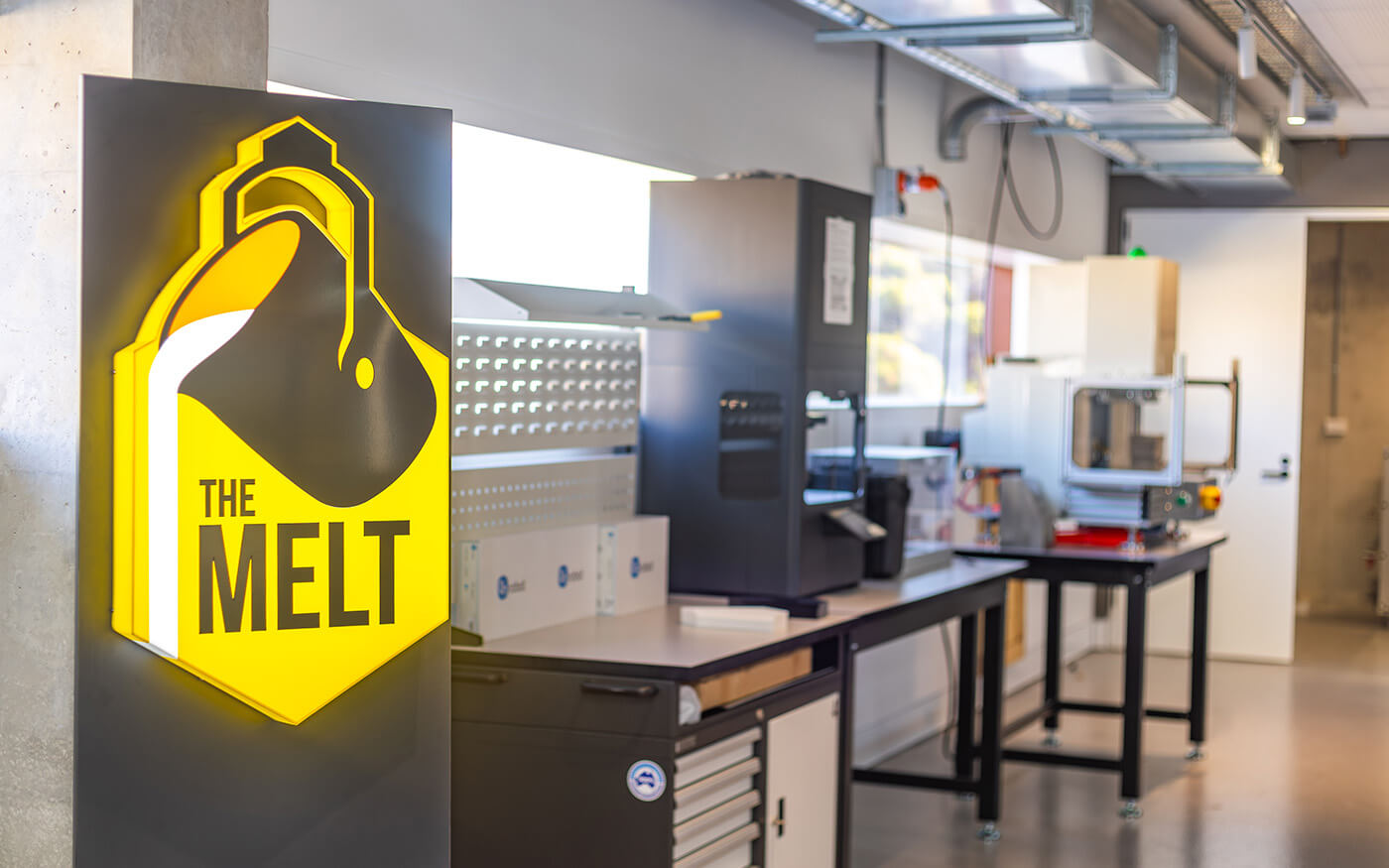
The Melt is a hardware accelerator that provides programs, services, facilities, and investment attraction to help clean technology and manufacturing start-ups from idea to global scale. Based in Muswellbrook, their latest industrial prototyping hub helps businesses fast-track great ideas into ready-to-market products.
Hysata is a green energy start-up based in Port Kembla. Bringing down the cost of clean hydrogen, their technological breakthrough is helping accelerate the shift away from fossil fuels in the world’s push toward net-zero targets.
Exploring the potential for microgrids to make the most of local renewable energy, the University of Wollongong's Clean Energy Living Laboratory will help communities and precincts become more energy efficient and self-sustainable in the push towards net zero targets.