Renewables generates 100 new jobs for Western Sydney manufacturer
14 August 2024
NSW is upgrading our electricity network, presenting a once-in-a-generation opportunity for businesses across the state.
One local manufacturer making the most of it is Sell & Parker. The family-owned scrap metal business and its subsidiaries Precision Oxycut and Allthread Industries are based in Smithfield, in Sydney’s western suburbs.
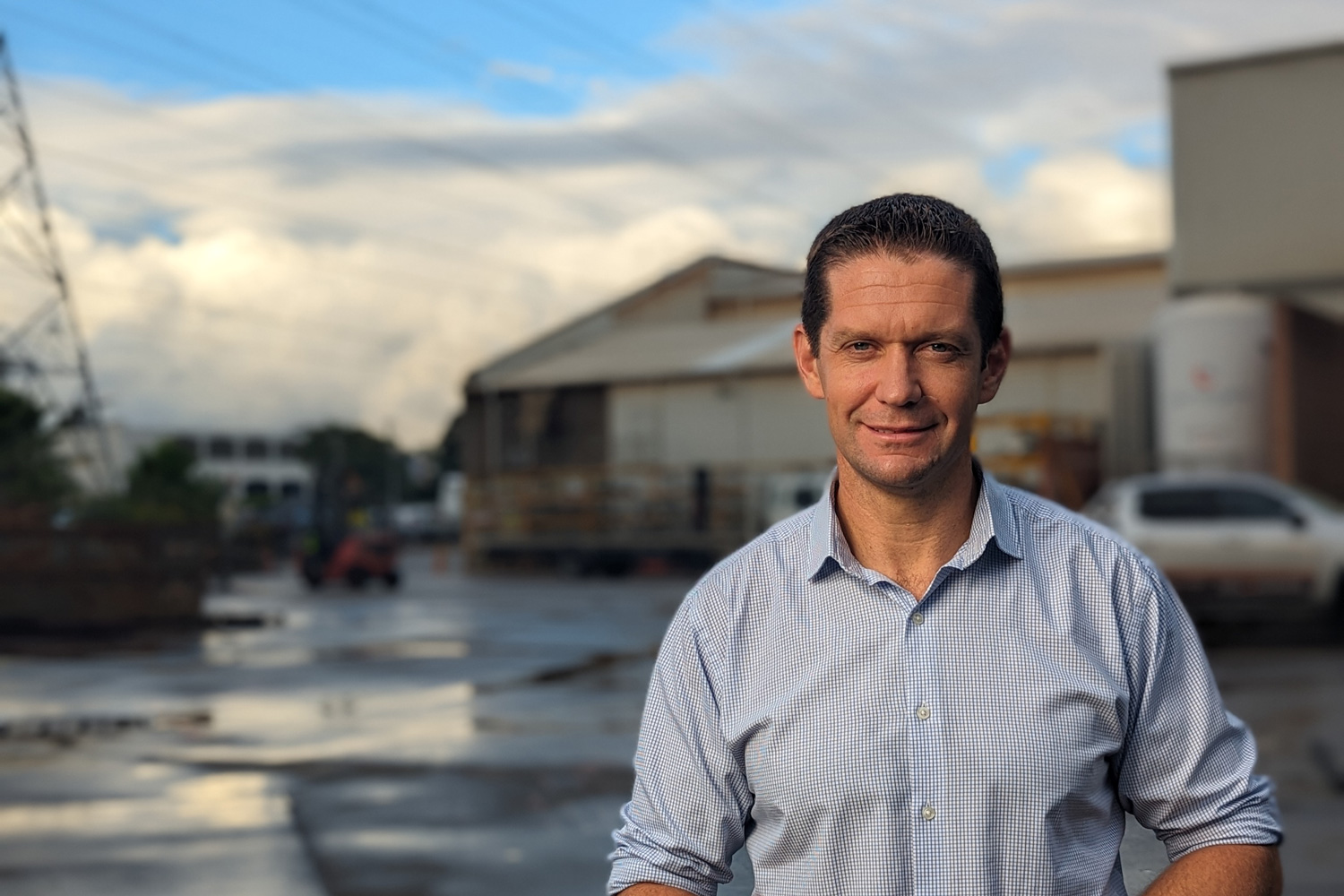
As Simon Preston, General Manager of these business divisions explains: “Once we saw the opportunity in renewable energy, we just grabbed a hold of that as fast as we could.” With its long-standing capability in steel fabrication, cutting and specialty bolt development, the business is now a contributor to the manufacture of wind towers. As an added benefit of the transition to renewable energy for businesses like Simon’s, NSW is seeing a huge increase in the demand for local steel required for these projects.
Simon Preston: Hi, my name's Simon Preston.
I'm the group general manager here at Precision Oxycut and Allthread Industries.
We've seen a huge opportunity, bigger than ever before, in the renewable energy sector, and we're now focusing on renewable energy: wind farms and solar farms.
Allthreads make the anchor cages, which is part of the large foundation that holds a tower up.
Think of a large bird cage made up of bolts.
That tower then stands at 180, 160 meters in the air with blades with a radius of 85 metres, and you've got 40 knots blowing against them.
That's a lot of force trying to tip it over.
The importance of the Roadmap from the New South Wales Government, is that to businesses like us, it gives a very clear understanding of where government is going, the policies that are in place, and what this transition is actually going to look like. There is a requirement of local content steel. For the renewable energy wind farms, it's 10% of the total steel content, and for the solar farms it's 95%.
If we didn't have that, then there's absolutely no way we could invest $56 million in what we are literally calling the Renewable Energy Manufacturing Hub.
The renewable market is attractive to us, and the reason is the volume.
It's just enormous. In being local, we can use 100% Australian manufactured
components with Australian steel, Australian labour, creating Australian jobs. When I came here, there was about 50 people in the total business, including our Newcastle facility. Now, in just Oxycut, there's 105.
As we project into somewhere in the realm of 160 people, we've essentially increased
by that time, a hundred jobs. That's a hundred families, and we're creating jobs here in Australia for the community while we do it.
So a lot of that has got to do with our participation in the renewable energy.
The Roadmap for New South Wales is very, very bright.
After joining Precision Oxycut, Simon explains how much the company has changed since he’s taken on the role: “This was a strong business going through a bit of a rough patch. My task was essentially to turn it around. Not just rebuild but grow beyond.”
Simon has a long career, across many of Australia’s blue-chip manufacturers: “I've been in manufacturing for about 25 years. I'm an engineer by trade. I got involved in manufacturing with CSR making bricks, then beverage cans at VISY and making polymer concrete drainage systems.”
The business Simon now leads is a specialist manufacturer of a critical assembly component used in wind tower construction known as an anchor cage. These steel structures, resembling what Simon describes as a ‘big bird cage’, standing 6.5 metres in diameter and 3.5 metres tall, are submerged under the earth at the base of each tower, providing the secure foundations for the structure. The anchor cage has a mass of approximately 3,000 tonnes once assembled.
Simon is proud of the growth: “We've seen a huge opportunity, bigger than ever before in the renewable energy sector.” Their next phase is targeted towards manufacturing components for solar farms: “We’ve invested really significantly. There’s probably between 4 to 5 million dollars that we’ve invested in the last 4 years that are specifically installed for this sector.”
Simon admits:
“Because of this opportunity both Precision OxyCut and Allthreads have grown dramatically. To put it into perspective, from when I started here 10 years ago, we have now increased our revenue to the tune of between five and six times what we were back then. If you look at when we started to do these renewable projects, we have, from that point, tripled.”
The good news for businesses across the state: these types of opportunities are set to continue with the NSW Government’s Electricity Infrastructure Roadmap (Roadmap). The Roadmap sets out how the state is transitioning the electricity network, to one that is built on solar and wind farms, large-scale energy story and transmission lines to carry electricity where it is needed most.
Simon is aware of the value of the state’s plan: “The importance of the Roadmap to businesses like us, is that it gives a very clear understanding of where the government is going, the policies that are in place and what this transition is going to look like.”
The confidence the Roadmap provides, along with the growth in the renewables sector, is a core reason the business is now investing over $56 million in a new custom-built facility in Blacktown, NSW.
One of the benefits of the Roadmap are the objectives it has set in relation to the use of locally produced and supplied goods and services in the construction of generation, storage and network infrastructure. For example, using a minimum percentage of local-made steel in the assembly of wind and solar farms (10% for wind farms and 95% for solar farms), ensuring circular benefits to the local economy, and contributing to local job creation.
Beyond the revenue growth the company has experienced, Simon is noticeably proud of the company’s ability to invest locally: “When I came here there were about 50 people total across the two businesses including the Newcastle facility. Now in Oxycut alone, there’s 105 and that’s largely to do with our participation in renewable energy.”
Commercial success aside, Simon acknowledges there are other factors of his job that give him satisfaction: “I actually like going home and telling my two daughters that I’m part of building a wind farm, because the generation behind us are already holding my generation accountable. I feel good about that.”
By embracing the opportunities presented by the renewable energy transition, Precision Oxycut and Allthread Industries have seen commercial growth, been able to create jobs within the communities in which they operate and are contributing to a more sustainable future for generations to come.
As Simon puts it: “Anyone in my game is going to think: Wow. I want to be a part of that.”
Find out more
Learn more about employment, training and local business opportunities.
More stories

The renewable energy sector is growing and will play an important role in NSW’s future, especially in regional areas. With that growth comes the opportunity to create long-term benefits for First Nations communities.
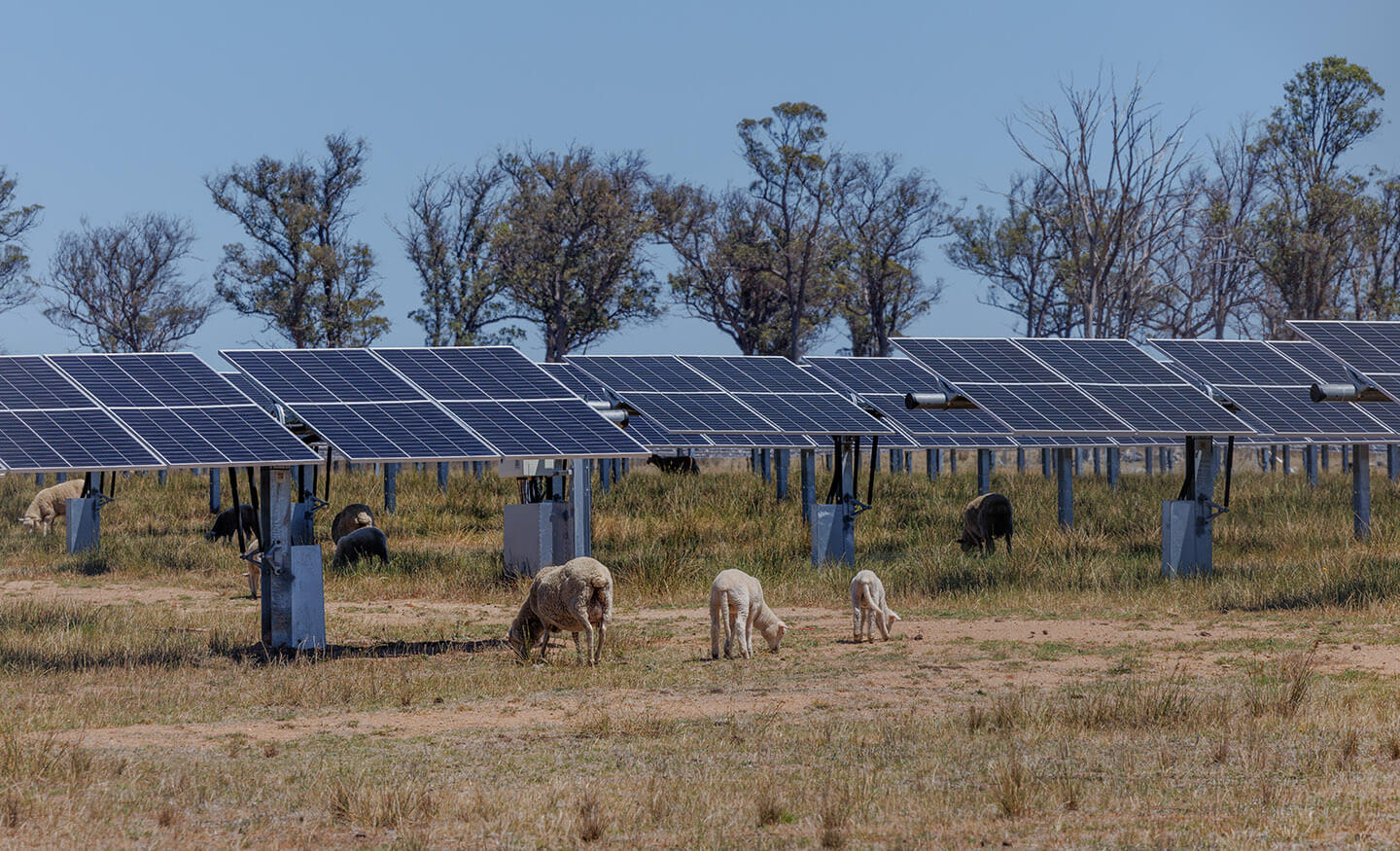
For fifth-generation farmer Cameron Wood, the future of farming doesn’t mean leaving tradition behind, it means evolving with it.
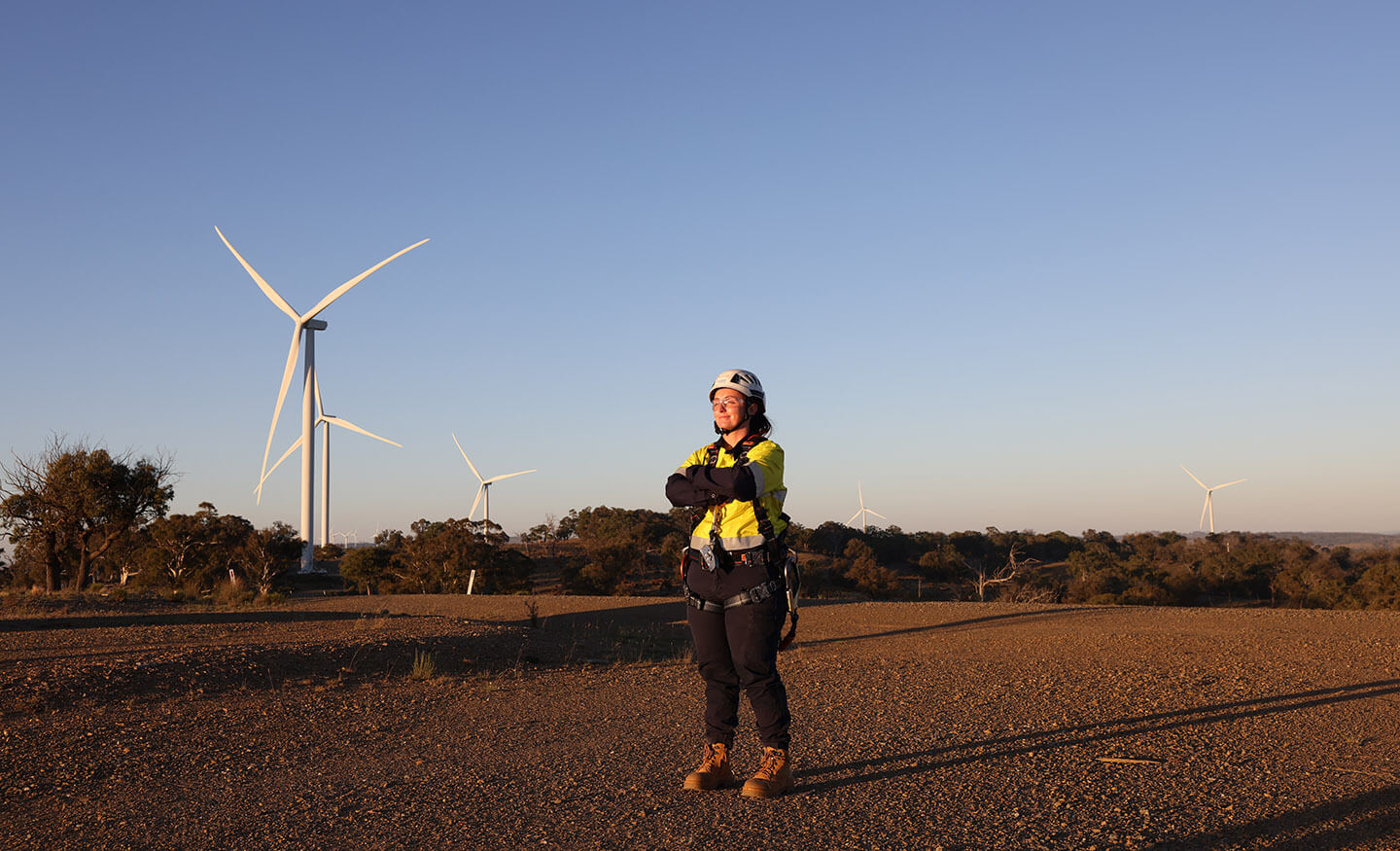
Five years ago, Kacee, a former mining electrician from Broken Hill, made the leap into the renewable energy industry and hasn’t looked back.