Green Gravity’s innovative energy storage technology for the Illawarra
In a 4-storey warehouse in Port Kembla, a Wollongong-based company is pioneering an energy storage technology that repurposes decommissioned mineshafts into Gravitational Energy Storage Systems (GESS).

Green Gravity has received NSW Government funding through the Clean Technology Innovation project development grant.
“Our GESS technology harnesses excess renewable energy in the middle of the day and stores or time-shifts this energy to times in the day when there is increased demand, like at night,” says Tania Jones, Manager Sustainable Market Development at Green Gravity.
Green Gravity’s technology could bring new life to the Illawarra’s closed mining assets, storing and supplying hundreds of megawatt hours of electricity.

The power of gravity
The system will draw on daytime solar power to lift heavy weights – each between 60 and 80 tonnes – up vertical mineshafts. During the evening when there is high electricity demand, the weights will be lowered back down the mineshaft to drive a regenerative motor to produce electricity.
“Because the regenerative motor is working to brake the descent of the weights, it acts like a generator, creating electricity to supply back into the grid,” Tania explains.

Reuse and repurpose – turning the old into the future
The infrastructure repurposes existing hoists, header frames, electricity distribution lines and substations at mine sites, to minimise costs and the environmental impact.
Mineshafts in the Illawarra region are ideal for Green Gravity’s purposes because of their depth and proximity to transmission infrastructure. Typically, each mineshaft is about 500 metres deep. Two shafts working in parallel could deliver 10–15 megawatts over 8 hours, about enough to power 3,000 homes.
In June 2023, Green Gravity commissioned a first-of-a-kind above-ground prototype called The Gravity LabTM.

Green Gravity used the Clean Technology Innovation grant funding to prototype heavier weights and refine gripping and stacking mechanisms before deploying them in a nearby disused mineshaft in a field demonstration at Russell Vale.

Towards net zero and a circular economy
Out of the 95,000 mines in Australia, 85,000 are closed or abandoned1, presenting an opportunity for Australia to repurpose its mining legacy for energy storage. Given the right depth and conditions for deploying GESS technology, Green Gravity have identified gigawatts of stored energy potential.
“The regions and communities in which these mines exist also possess the skillsets and supply chains to support GESS deployment and operation. Skills transition from mining and regional job creation in renewable energy can occur,” Tania says.
When existing infrastructure and disturbed land are used to make the sun’s energy available during the night, NSW will be a step closer to meeting its renewable energy targets.

NSW Climate Technology Impact Award winner
Green Gravity was awarded the NSW Climate Technology Impact Award in 2025, for pioneering a radical rethink of energy storage.
Their GESS technology was lauded as a compelling example of how the infrastructure of the past can power the clean energy future and contribute to a circular economy, as well as for its simplicity in design and long operating life-span.
All photos courtesy of Green Gravity.
1 Australian Mines Atlas (ga.gov.au) | Department of Industry, Science, Energy and Resources
More success stories from the Climate Change Fund

Carbon farming in the Riverina is opening new revenue streams while helping the environment.

Scope 3 emissions typically make up the largest share of an organisation’s carbon footprint, yet they remain the most complex to measure and reduce.
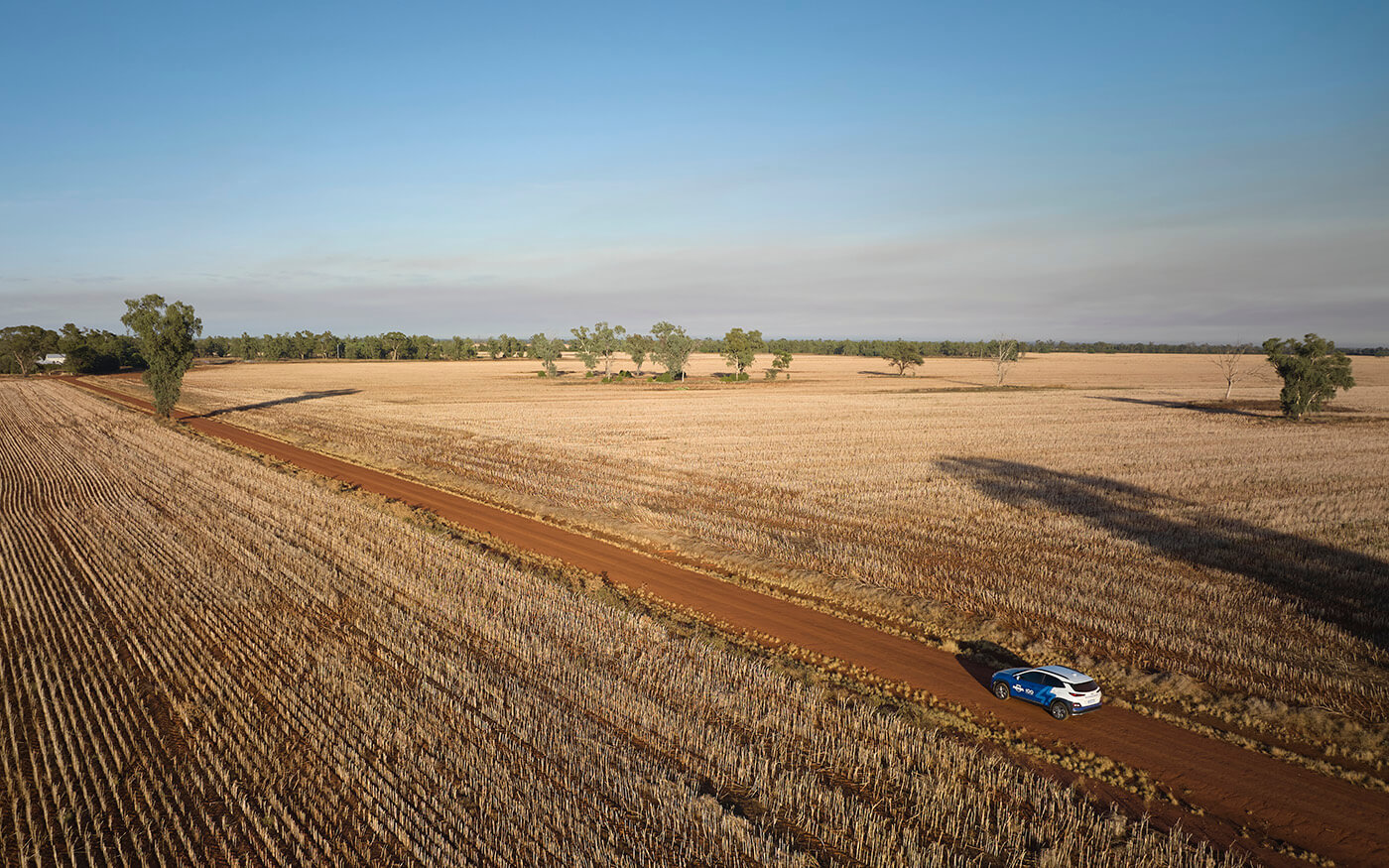
‘Range anxiety’, or the fear of running out of battery power and being stranded, has long been a significant perceived barrier to the widespread adoption of EVs.