All about renewable energy
12 August 2025
Join Australia’s leading science communicator and author, Dr Karl Kruszelnicki, and wind turbine engineer and host of YouTube’s ‘Engineering with Rosie,’ Dr Rosemary Barnes, to find out all about NSW’s move to renewable energy.
With three out of four of NSW’s remaining coal-fired power stations set to close within the next ten years, we need an energy solution to meet our needs now and into the future.
With our rich supplies of sun and wind, NSW is well-placed to harness renewables, which are the lowest-cost way to generate new power. We have enough renewable energy potential to meet our electricity needs many times over. In fact, more than 35% of NSW's energy already comes from renewable sources.

Our modern electricity network is built on solar and wind, large-scale energy storage and new transmission lines. Let’s find out how these three things work together to power NSW.
“There can be no energy transition, without transmission," says Dr Karl. Find out how ‘electricity super-highways' are a key part in the upgrade of NSW’s electricity network.
Dr Karl: G'day, Doctor Karl here.
Right now across NSW, a new renewable energy network is being built and often in places where electricity has never been generated before.
And that's why we need new transmission lines, because here's the deal: There can be no energy transition without transmission.
Think of transmission lines as electricity super highways.
They carry huge amounts of high voltage electricity across massive distances, and in fact as much as 40 times the voltage as the local poles and wires in your street.
Once the electricity moves from where it is generated or stored through the transmission lines, it arrives at a distribution hub or a substation and from there the high voltage electricity is stepped down to lower voltages to make it suitable for everyday appliances.
This is then fed into the distribution poles and wires as you can probably see outside your house right now.
So next time you see transmission lines, remember they are the electricity superhighways that we need to deliver the renewable energy transition.
How do wind turbines actually work? Engineer Dr Rosie Barnes is here to break it down for us.
Dr Rosie Barnes: Hi everyone, Rosie here, host of Engineering with Rosie.
I'm here to explain how wind energy works.
Wind energy is a big part of NSW future electricity network.
While wind turbines seem like the latest tech, we've been harnessing wind power in different forms for centuries.
The modern wind turbine, the kind to generate electricity, has been around since the 19th century.
That small beginning was the start of an entirely new era in energy.
So let's understand how these towers of power work.
The blades in a wind turbine are designed to catch the breeze.
As the wind blows, it makes a blade spin, and that motion powers a generator inside the turbine.
The electricity then travels down cables within the turbine tower and into a transformer, which increases the voltage.
From there, it's sent to the electricity grid, ready to power our homes and businesses.
OK, now we know the basics.
Let's jump into some cool facts about wind turbines.
With a maximum output of up to 7 megawatts, new wind turbines pack a serious punch.
Over a year, a single turbine can produce enough electricity to power up to 4000 homes.
So what about when the wind isn't blowing well?
Wind farms are picked based on locations that have the best year round wind and therefore the best energy production.
Also, because there are wind farms located across NSW, when the winds calm in one part of the state, it may be blowing strongly somewhere else.
And for times when the wind takes a break, energy storage such as pumped hydro or big batteries comes into play.
So there you have it.
And that's just the tip of the turbine.
Wind energy is a dynamic and evolving renewable energy technology.
Because sometimes the wind doesn’t blow and the sun doesn’t shine, NSW needs to store some of its abundant energy. Dr Karl explains how battery energy storage systems help make that possible.
Dr Karl: G'day Doctor Karl here, electrifying you with information about batteries and their role in renewable energy in NSW.
A BESS is a massive rechargeable battery for the grid, but it's more than just a battery.
It's also a buffer and a balancer, essential for helping different parts of the grid work together by shifting electricity to when and to where we need it.
When solar panels are soaking up the sunlight and the wind turbines are spinning in a breeze, they're producing heaps of energy, and sometimes more than we can use at
that time.
So when this energy is flowing in abundance, a BESS stores it up.
But the sun doesn't shine 24/7, and sometimes the wind's not blowing.
So when generation dips, say on a cloudy, windless day or at night, a BESS releases that stored energy back into the system, keeping the electricity humming along
smoothly.
It's the grid's own backup stash of power, ready and waiting to jump in when renewable energy needs to be soaked up or when it needs a boost.
Find out more
Learn more about how NSW will benefit from the energy transition.
Related stories
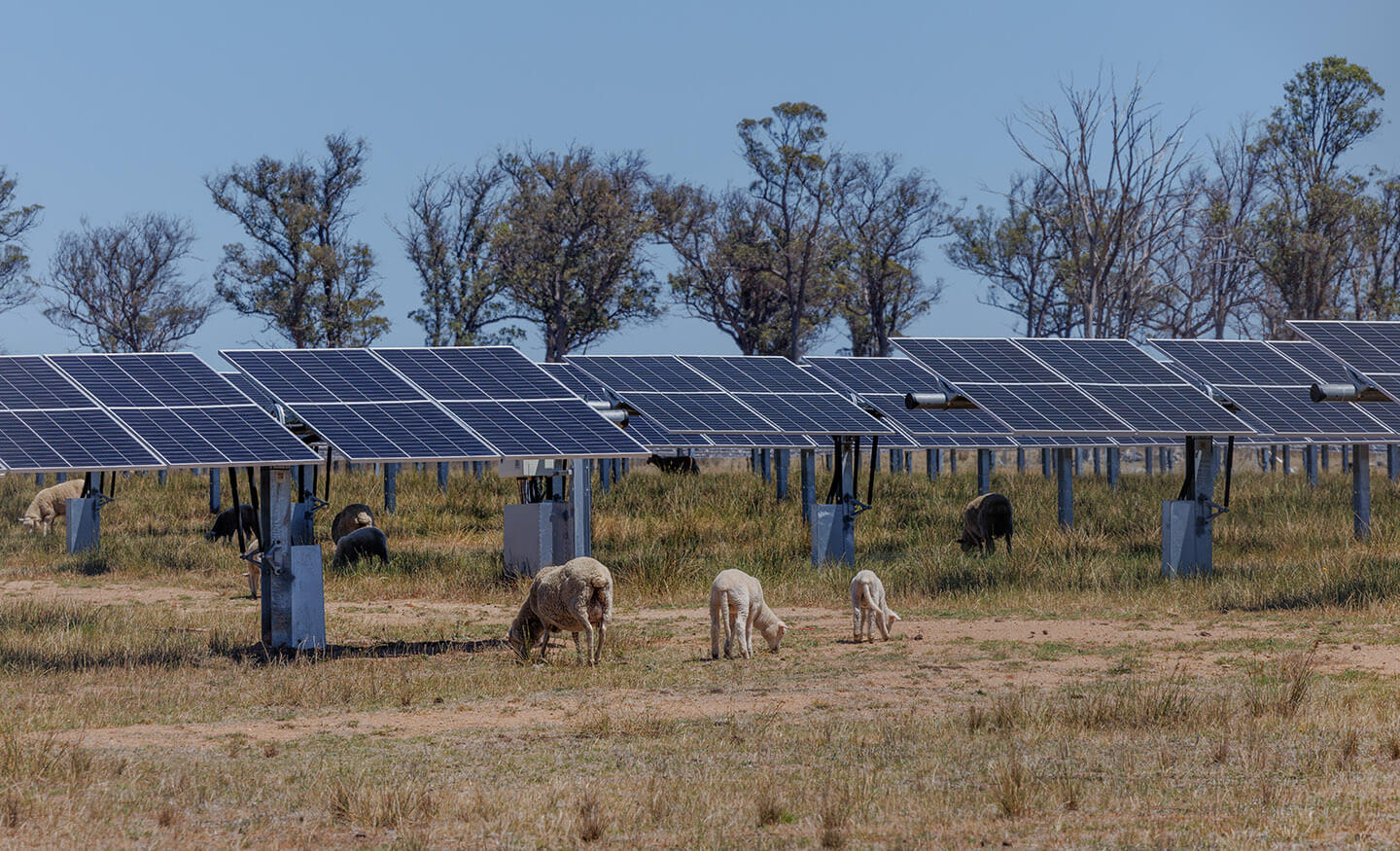
For fifth-generation farmer Cameron Wood, the future of farming doesn’t mean leaving tradition behind, it means evolving with it.
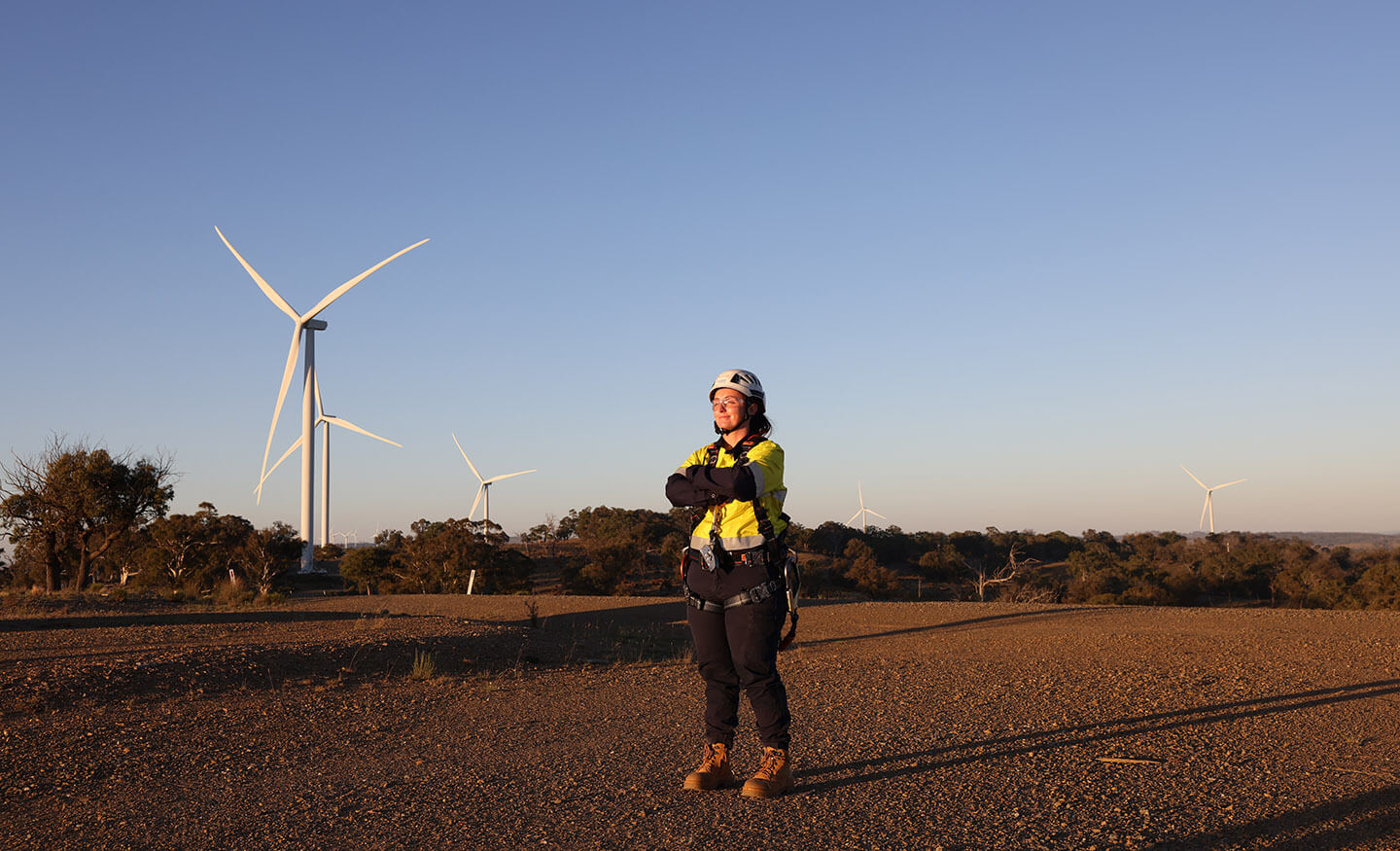
Five years ago, Kacee, a former mining electrician from Broken Hill, made the leap into the renewable energy industry and hasn’t looked back.

The renewable energy sector is growing and will play an important role in NSW’s future, especially in regional areas. With that growth comes the opportunity to create long-term benefits for First Nations communities.